This 5-Minute No-Cook Gluten-Free Pizza Sauce is rich, tangy, and tastes like a classic Italian pizza sauce that simmered on the stove for an hour, but it comes together in a single bowl with a whisk and one special ingredient. No cooking, no cleanup, no waiting around for a pot to reduce.
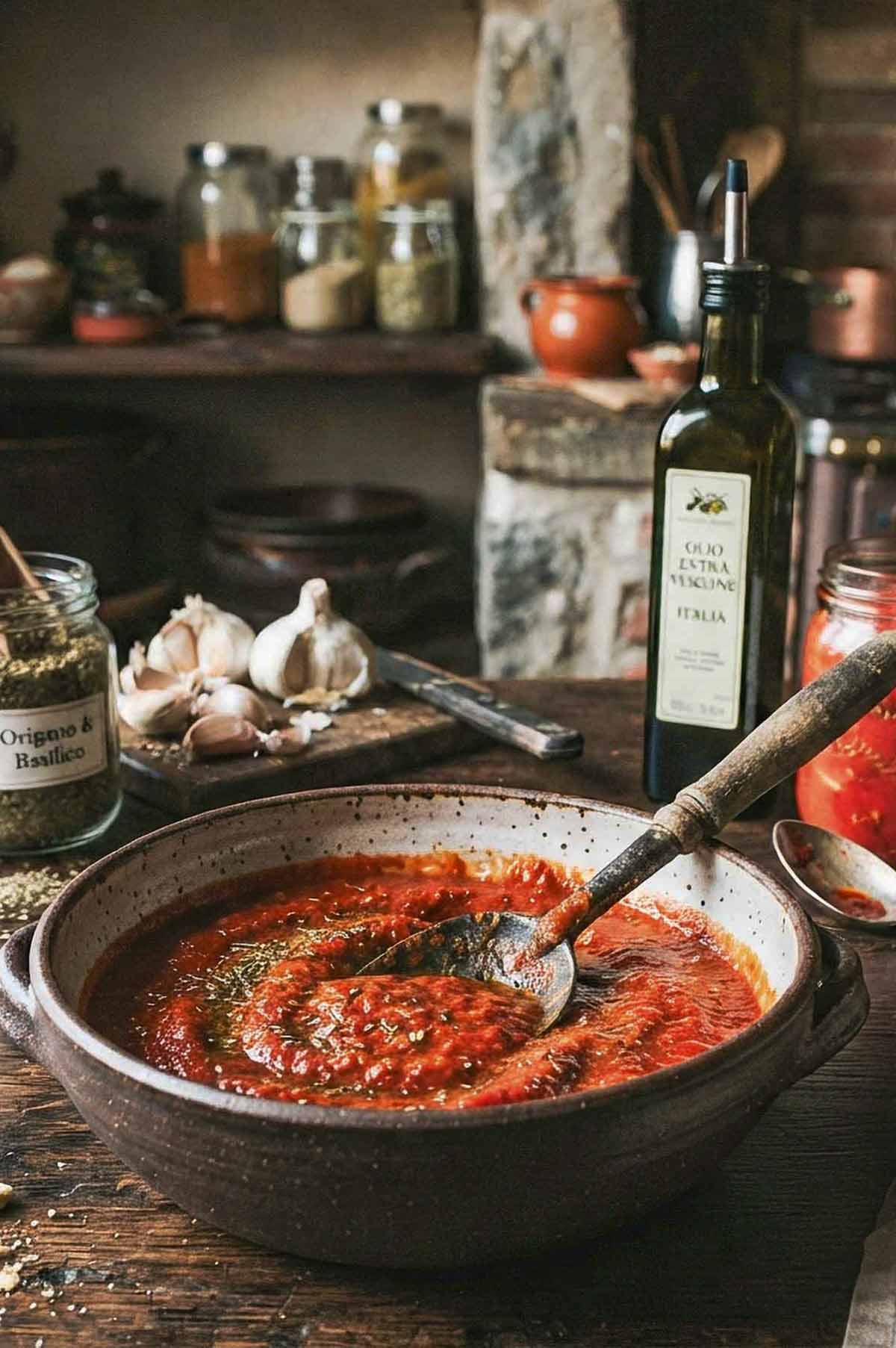
Recipe Highlights
- Zero stovetop time — ready before your oven finishes preheating.
- No babysitting a pot — no risk of scorched, sticking-to-the-bottom sauce, and no separated texture like store-bought jarred sauce.
- Tastes simmered, isn’t — a splash of balsamic vinegar rounds out the tart tomato edge that most no-cook sauces have.
- Naturally gluten-free — no thickeners, fillers, or citric acid needed.
Key Ingredients and Substitutions
- Crushed tomatoes: swap for fire-roasted crushed tomatoes or tomato sauce for a smokier base
- Balsamic vinegar: the surprising ingredient. A small splash of gluten-free balsamic adds the rounded, slightly sweet depth you’d normally only get from a long simmer
- Seasoning: replace oregano, basil, and thyme with 1½ teaspoon gluten-free Italian seasoning
- Minced garlic: sub with ¼ tsp gluten-free garlic powder
Tips For Best No-Cook Gluten-Free Pizza Sauce
Make it a day ahead if you can. This sauce is good right after whisking, but it’s better after a rest. Time in the fridge gives the flavors a chance to fully develop.
The garlic mellows and the dried herbs fully hydrate and infuse the tomatoes, so the sauce tastes rounded and blended instead of like individual ingredients sitting on top of each other. If you’re short on time, even 30–60 minutes in the fridge makes a noticeable difference, but overnight is best.
Why the balsamic vinegar? Since this sauce never touches heat, it can taste a little sharp on its own, the kind of raw-tomato edge you’d normally cook out over a long simmer. A small splash of balsamic adds that same rounded, slightly sweet depth without any stovetop time.
Bring it to room temperature before spreading. Cold sauce straight from the fridge can leave a gummy, undercooked layer under the crust, let it sit out for 10–15 minutes before spreading it on your dough.
Taste before you spread it. Because this sauce isn’t cooked, the salt and sweetener won’t mellow the way they would over heat, taste it cold, straight from the bowl, since that’s closer to how it’ll taste on the finished pizza.
Give fresh garlic time to mellow. Raw garlic is sharper and more pungent than cooked garlic, so if you’re using fresh cloves, the resting time makes an even bigger difference in the final flavor.
3 Pizza Sauce Variations
- Extra Cheesy: stir in 1 cup shredded mozzarella or parmesan before spreading
- Spicy Kick: add 1–2 tsp hot sauce or extra red pepper flakes
- Smoky Chipotle: stir in ½–1 tsp adobo sauce from canned chipotles for a smoky-spicy version
Storing for Freshness
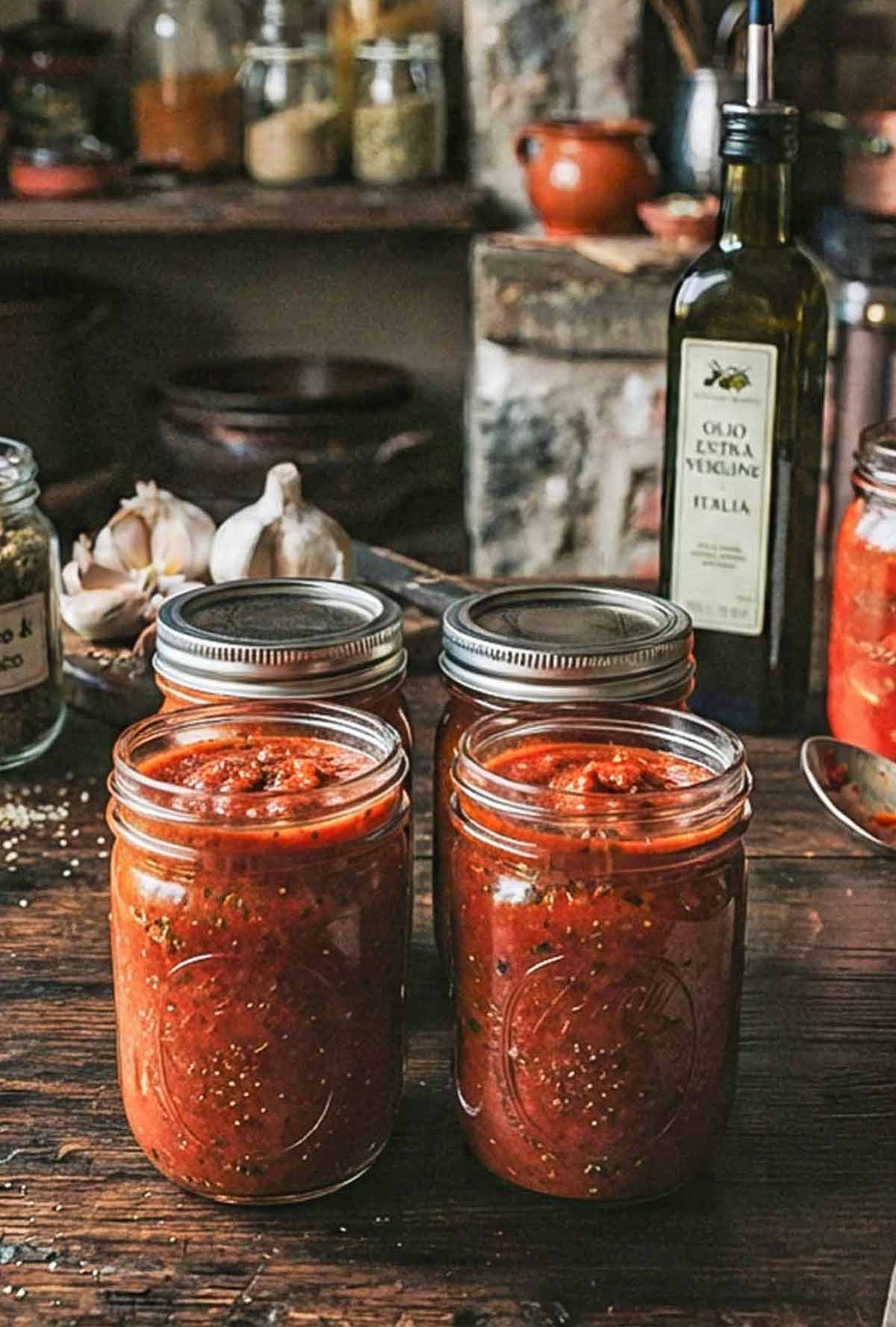
Keeps up to 5 days refrigerated. Freeze in an airtight container up to 2 months; defrost overnight in the refrigerator before using.
Pizza Sauce FAQs
How much sauce should I use per pizza?
About 1/3 cup per 12-inch pizza. Over-saucing is the most common mistake people make, too much sauce makes the crust soggy instead of crisp.
Can I double or triple this recipe?
Yes, it scales easily. Just whisk everything together in a larger bowl using the same ratios.
Can I use canned tomato sauce instead of crushed tomatoes?
Yes, the texture will be smoother. Reduce the tomato paste to 1 tbsp so the sauce isn’t too thick.
Is this the same as marinara sauce?
Not quite, marinara is typically thinner and used for dipping or pasta, while this sauce is thicker (thanks to the tomato paste) so it holds up on pizza dough without making it soggy.
Do I have to refrigerate it before using?
No, you can use it right away, but resting it for at least an hour lets the flavors meld and noticeably improves the taste.
Can I use this for calzones or pasta?
Yes, it works well as calzone filling as is. Or thin it slightly with couple of tablespoons of good quality extra virgin olive oil for pasta.
5 Best Uses for Pizza Sauce
- Easiest Gluten-Free Detroit-Style Pizza — thick crust, cheesy edges, and all that good stuff. The best part? Finish it off with this homemade pizza sauce.
- Gluten-Free Baked Pizza Pockets — filled with cheese, pepperoni, and this pizza sauce. Or in Gluten-Free Stromboli Bread.
- Gluten-Free Chicago Deep Dish Pizza — use this pizza sauce in place of sliced tomatoes.
- Low-Carb Zucchini Baked Ziti — use it to replace the crushed tomatoes.
- Gluten-Free Cottage Cheese Flatbread — serve it on the side as a dipping sauce. Or with Gluten-Free Italian Mozzarella Cheese Sticks.
I have also been know to add it to soups and stews for extra flavor.
Hi, I’m Kristina, a gluten-free recipe developer creating and testing recipes since 2012. Every recipe on this site is made in my kitchen and personally tested (with the help of my very honest family!).
Did you make this recipe? I’d love to hear how it turned out! Leave a ⭐⭐⭐⭐⭐ rating and a quick review below, it helps other gluten-free cooks discover recipes they can trust.
Looking for more gluten-free inspiration? Subscribe to the newsletter for new recipes delivered straight to your inbox — no spam, just good food. You can join our community on Pinterest, Facebook, and Instagram.






Comments
No comments yet.