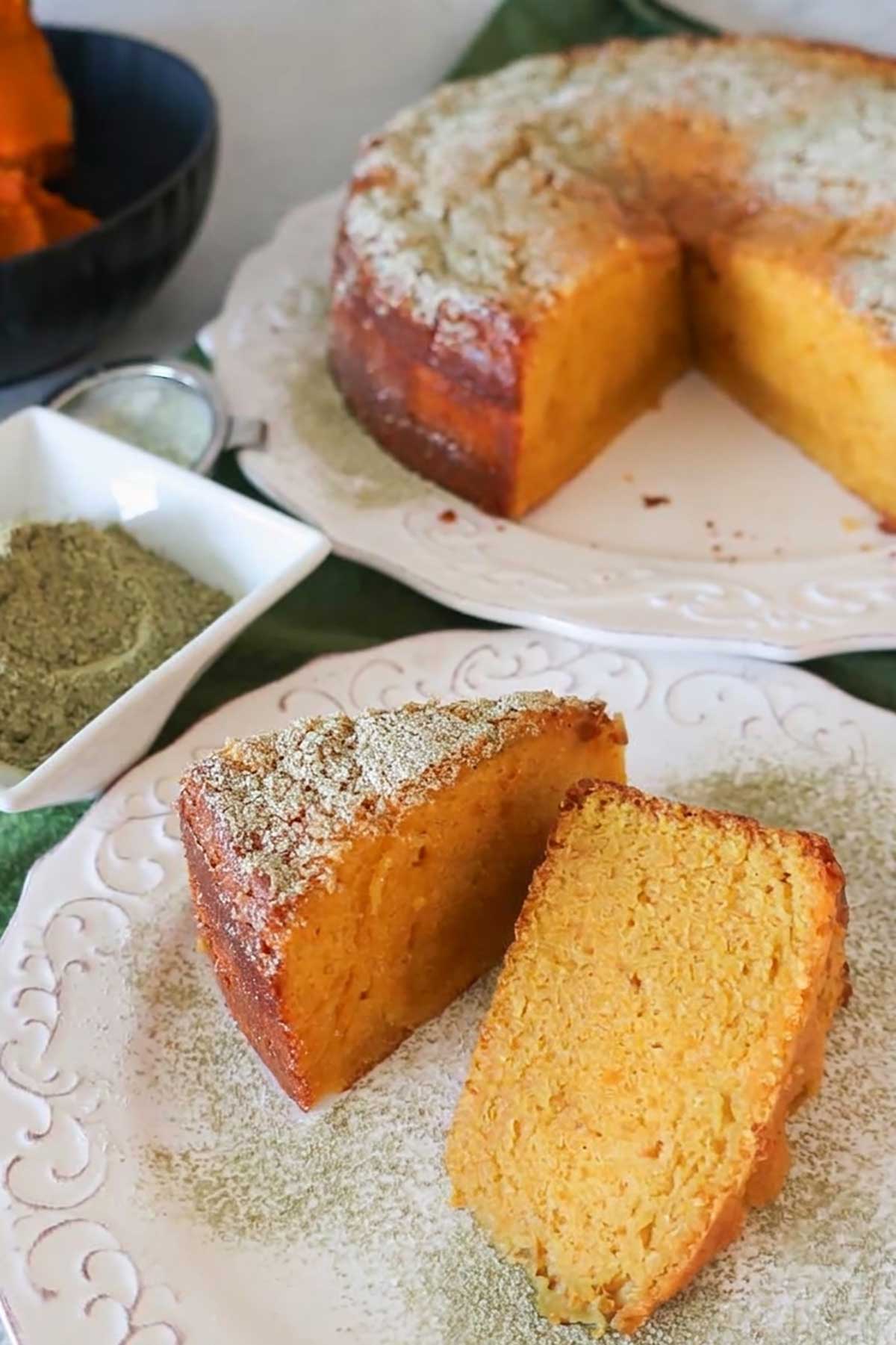
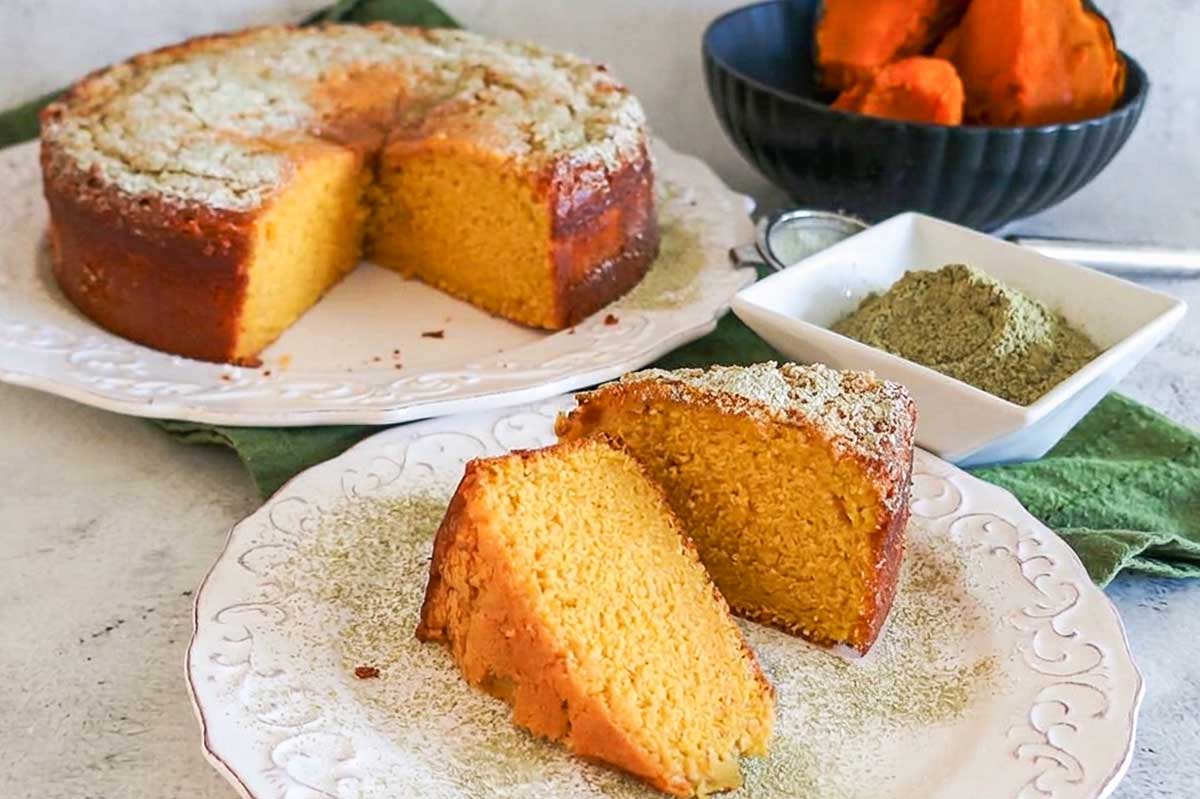
This kabocha mochi cake has a golden top, slightly crisp edges, and a soft, springy, chewy center. Inspired by Hawaiian butter mochi, this gluten-free cake is made with rice flour and has a rich, buttery flavor balanced by the natural sweetness of Japanese kabocha squash. It’s lightly sweet, easy to make with under 10 ingredients, and a great way to try mochi desserts if you’re new to them.
Why You’ll Love This Kabocha Mochi Cake
- A chewy, springy texture: Rice flour and tapioca starch create a pleasantly chewy center with tender edges.
- Naturally sweet flavor: Kabocha squash adds subtle sweetness and a delicate flavor that pairs beautifully with vanilla and butter.
- Naturally gluten-free: Made with white rice flour and tapioca starch, so you don’t need a commercial gluten-free flour blend or xanthan gum.
- Easy to prepare: The batter comes together in just two bowls, one for wet ingredients and one for dry.
- Beautiful for entertaining: The golden top and chewy texture make it a lovely dessert for holidays, gatherings, or afternoon coffee.
If you are searching for rice flour desserts try my Gluten‑Free Lemon Zucchini Bread (Rice Flour Loaf), or the The Ultimate Buttery Gluten-Free Pound Cake, with a perfect crumb made with rice flour.
About Butter Mochi
Butter mochi is a beloved Hawaiian dessert, a staple at potlucks and family gatherings, with its chewy texture rooted in Japanese mochi traditions. This kabocha version is a Japanese-American twist on that classic. Traditional butter mochi uses glutinous (sweet) rice flour, while this recipe uses regular white rice flour plus tapioca starch for a similar chewy, springy bite.
Key Ingredients and Swaps
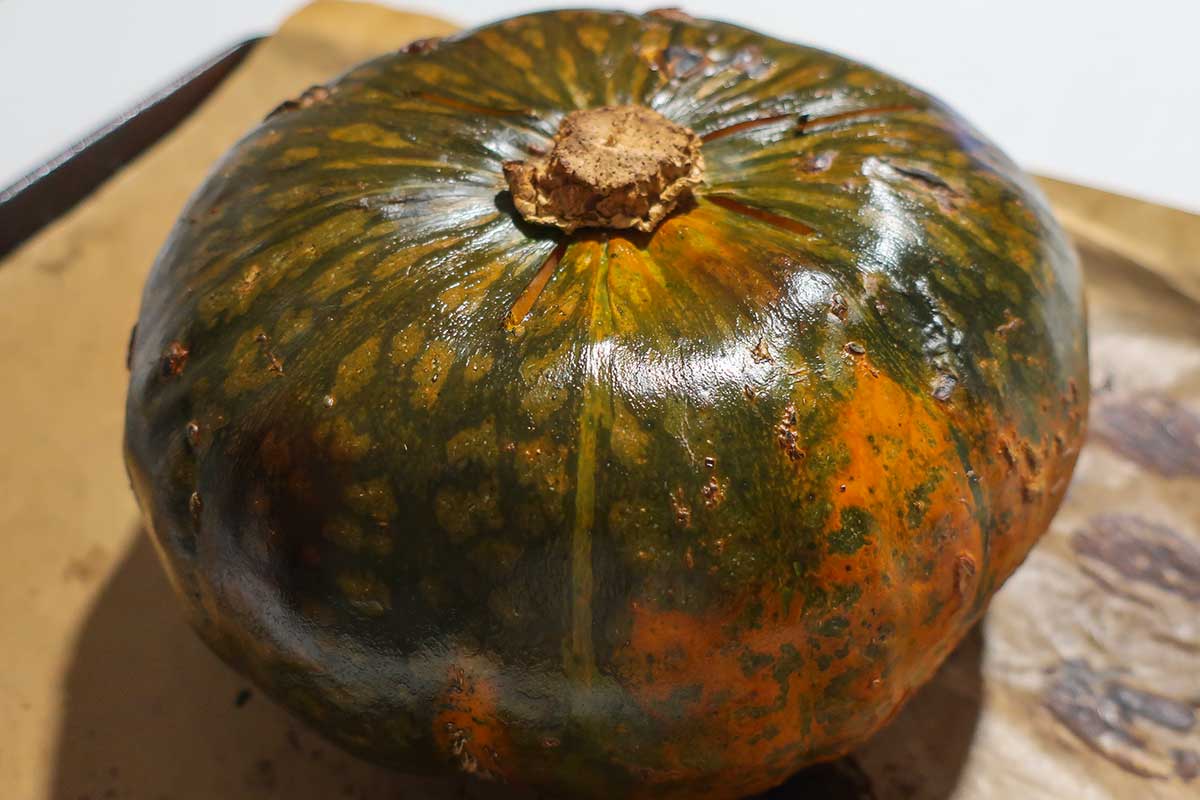
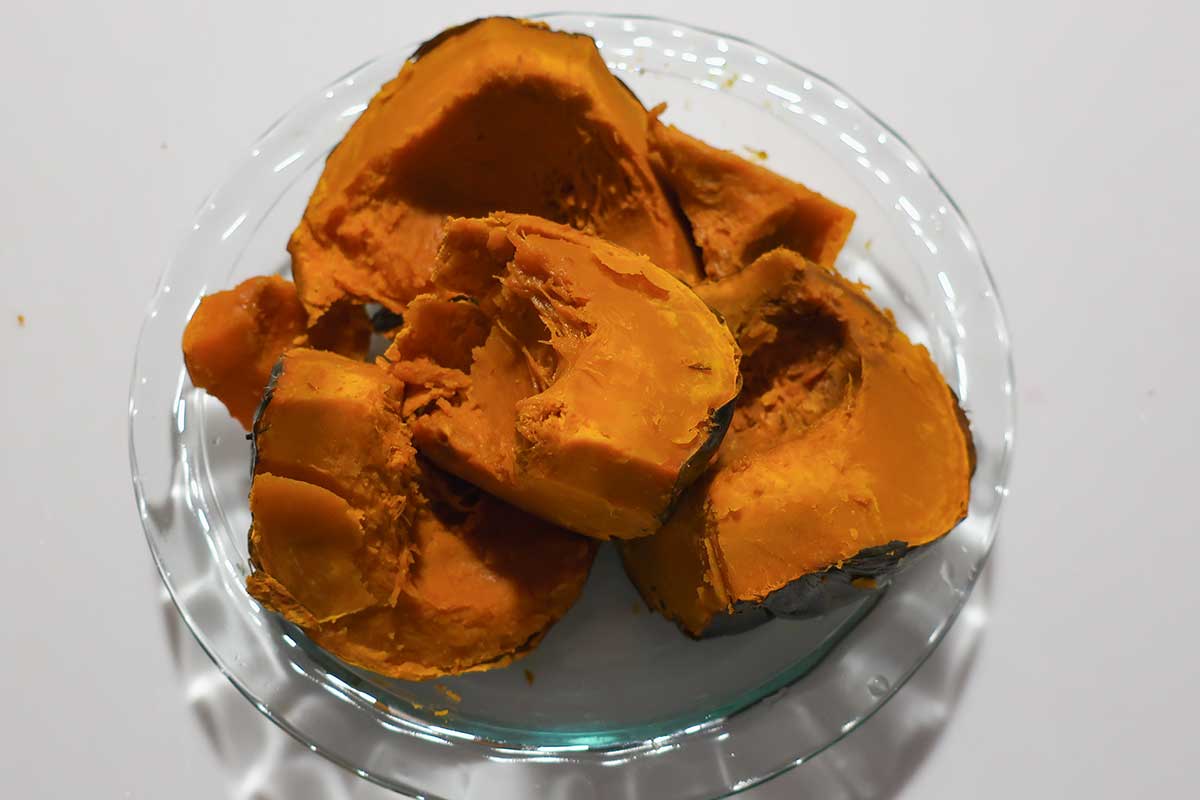
- Kabocha squash: Japanese pumpkin has a naturally sweet flavor and dense, starchy flesh. Baking concentrates its flavor and makes it easy to mash. You’ll need about 1 cup of puree.
- White rice flour: Provides the structure for the cake. Use regular white rice flour, not glutinous or sweet rice flour (often sold as mochiko), for the smoothest texture and delicate flavor.
- Tapioca starch: Adds elasticity and chewiness, giving the cake its mochi-inspired texture.
- Sweetened condensed milk: Provides sweetness, richness, and moisture. It’s an important part of the cake’s texture, so I don’t recommend substituting regular milk and sugar.
- Butter: Adds richness and contributes to the golden exterior.
- Eggs: Help bind the batter and provide structure.
- Whole milk: Hydrates the rice flour and tapioca starch while keeping the center moist.
- Vanilla extract: Adds a subtle flavor that complements the kabocha.
Gluten-free reminder: Make sure all packaged ingredients are labeled gluten-free or verified by the manufacturer. Shop my favorite gluten-free products and baking essentials in my Amazon Store.
Tips for Making Kabocha Mochi Cake
- Use smooth kabocha puree: Mash the cooked squash thoroughly to avoid lumps in the finished cake. I used a food processor for an extra smooth texture.
- Don’t overmix: Once the dry ingredients are added, mix just until the batter is smooth. Avoid beating it, which can affect the final texture.
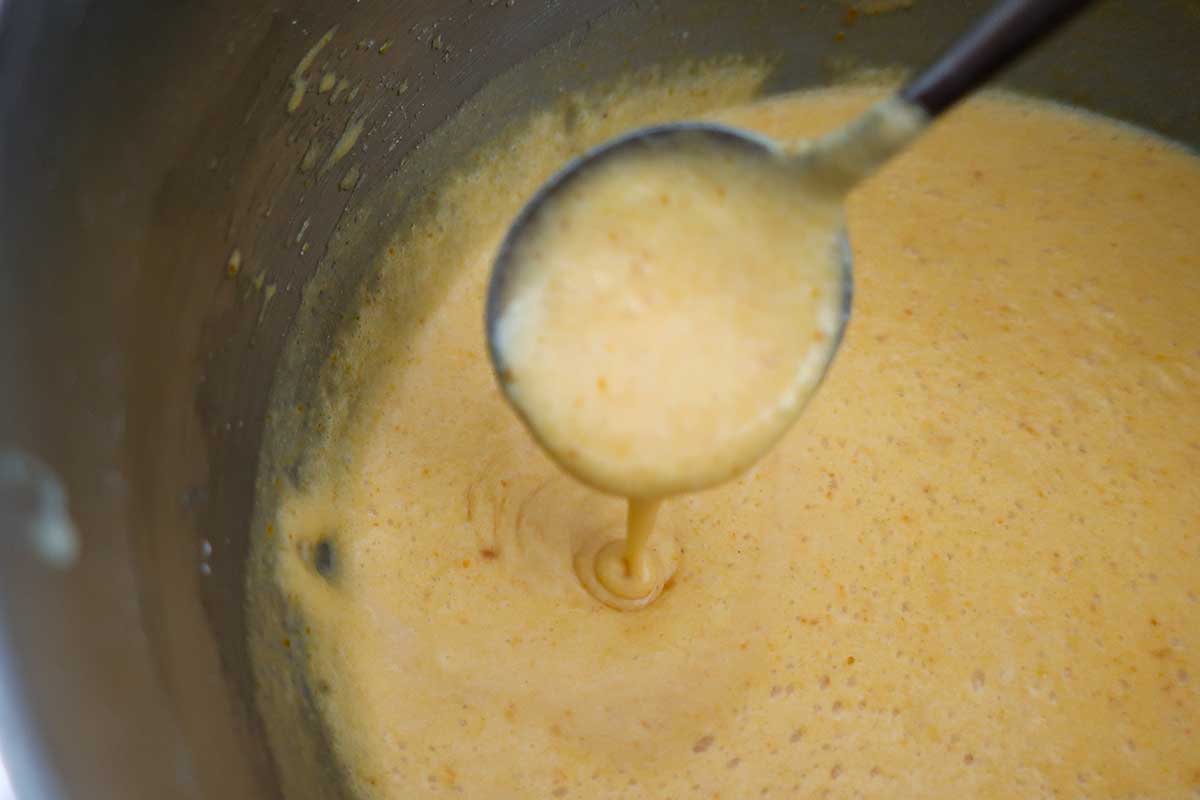
- Let the batter rest: The 20-minute resting period is a must. It hydrates the rice flour and tapioca starch and thickens the batter.

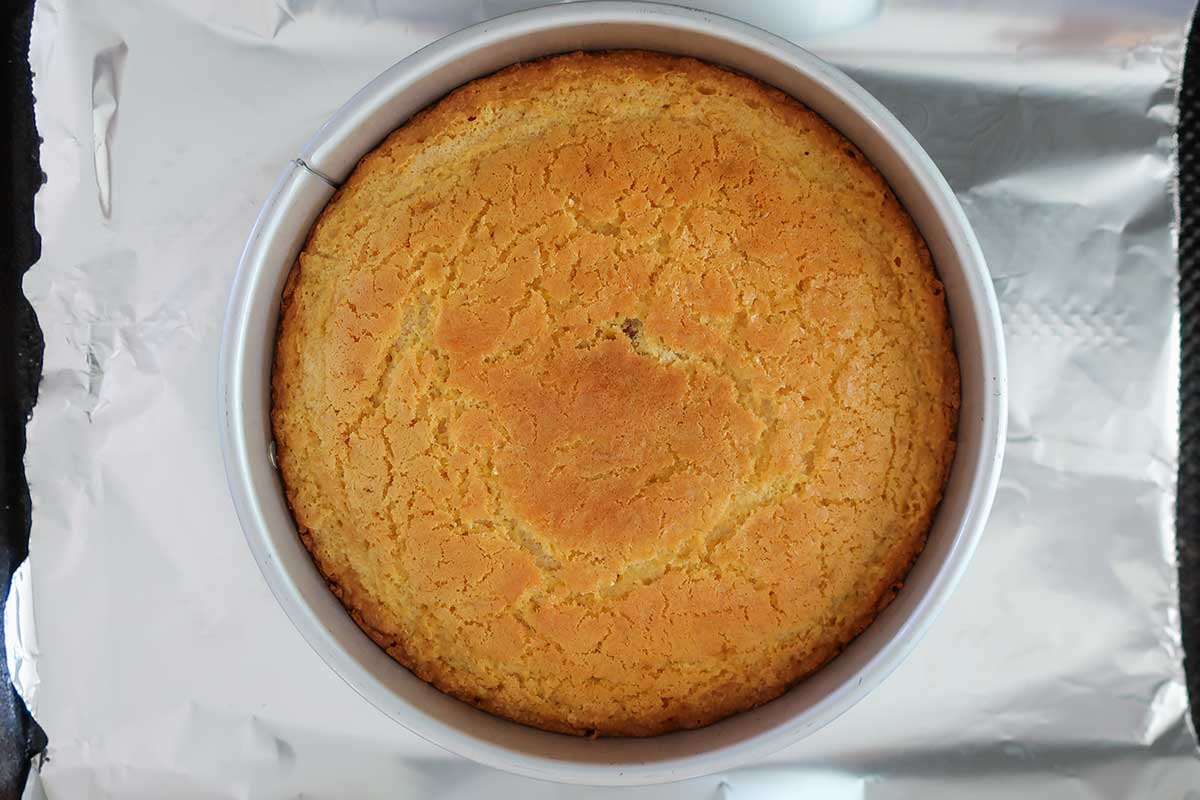
- Watch the top while baking: The cake should have a golden brown top and slightly crisp edges. Avoid overbaking, which can cause the cake to crack and dry out. The small cracks you see are after baking once the cake sets.
How to Cook Kabocha Squash for This Recipe
Kabocha can be baked or steamed until fork-tender.
To bake: Preheat the oven to 400°F. Pierce the whole squash a few times with a sharp knife and place it on a baking sheet. Bake for 50 to 60 minutes, depending on size, until the flesh is very tender.
Let cool, cut in half, and remove the seeds. Scoop out the flesh and mash until smooth, or blend in a food processor. Measure the amount needed for the recipe.
How to Serve Kabocha Mochi Cake
Allow the cake to cool completely before slicing. Serve plain to enjoy its buttery kabocha flavor, or dust with powdered sugar and matcha powder for a simple finish. Toasted coconut flakes, sesame seeds, or sliced almonds also make lovely toppings. If you prefer a sweeter cake, drizzle the top with honey or pure maple syrup.
Check out my 21 Best Gluten-Free Pumpkin Recipes for inspiration.
Storing and Reheating Gluten-FreenKabocha Mochi Cake
- Refrigerating: Store the completely cooled cake in an airtight container in the refrigerator for up to 4 days. The texture becomes firmer as it chills. I don’t recommend serving it chilled.
- Reheating: To soften chilled cake, microwave a slice for 10 seconds, or let it sit at room temperature for before serving.
- Freezing: Wrap individual slices well and freeze in an airtight freezer-safe container for up to 2 months. Thaw overnight in the refrigerator.
- Make ahead: The cake can be baked a day ahead and kept covered at room temperature until the next day. For the best presentation, add powdered sugar and matcha just before serving.

Frequently Asked Questions About Mochi
Is mochi cake gluten-free?
This one is. It’s made with white rice flour and tapioca starch, both naturally gluten-free. Just check that your other ingredients are labeled gluten-free.
Can I use glutinous rice flour (mochiko) instead of white rice flour?
This recipe was developed with regular white rice flour and tapioca starch, so I recommend sticking with them. If you prefer to use glutinous rice flour, replace the rice flour and tapioca starch 1:1 for glutinous rice flour.
Can I use canned pumpkin instead of kabocha?
Kabocha has a denser, starchier, naturally sweeter flesh than most pumpkin, which is what gives this cake its flavor, but yes you can swap for canned pumpkin, the texture will be more like a coffee cake.
Can I make this dairy-free?
The sweetened condensed milk, butter, and milk all contribute to the texture, so substitutions will change the result.
Why is my mochi cake gummy?
The most common causes are slicing before the cake has cooled completely or underbaking. Let it cool fully, and bake until the top is golden and the center is set.
Why did my cake crack or turn dry?
Overbaking is the usual culprit. Pull the cake once the top is golden brown and the edges are slightly crisp.
Why is my cake firm after refrigerating?
Rice flour cakes and butter firm up when chilled. See the reheating tips above to bring back the soft, chewy texture.
Hi, I’m Kristina — I’ve been developing and testing gluten-free recipes in my own kitchen since 2012, with help from my very honest family.
Did you make this recipe? Leave a ⭐⭐⭐⭐⭐ rating and a quick review below, it helps other gluten-free cooks find recipes they can trust. For more, join me on Pinterest, Facebook, and Instagram.




Comments
No comments yet.