
Meat Cooking Temperatures: A Complete Guide to Meat Temps
Knowing the right meat cooking temperature takes the guesswork out of cooking beef, pork, poultry and lamb. Whether you’re roasting a large cut, grilling a steak or cooking chicken breasts for dinner, the most reliable way to know when meat is done is to check its internal temperature with a food thermometer.
Cooking time can vary considerably depending on the cut, thickness, size, cooking method and starting temperature of the meat. Internal temperature is a much more reliable guide than minutes per pound.
The USDA recommends cooking beef, pork, lamb and veal steaks, chops and roasts to a minimum internal temperature of 145°F, followed by at least a 3-minute rest. Ground beef, pork, lamb and veal should reach 160°F, while all poultry should reach 165°F.
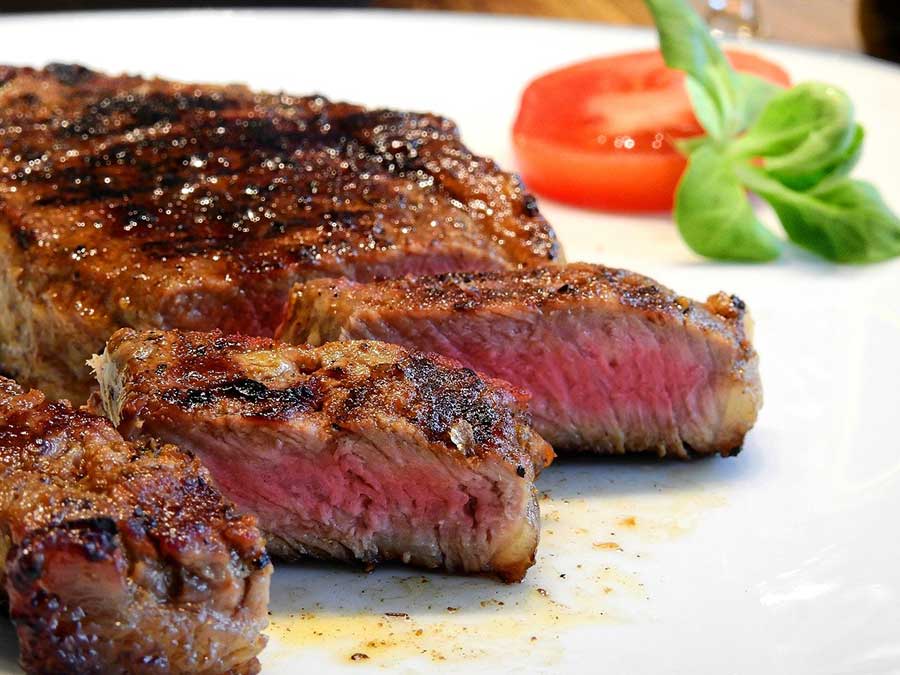
Meat Cooking Temperatures Chart
Use a food thermometer to check the internal temperature of meat and poultry. Cooking time can vary depending on the size, thickness and cooking method, so temperature is the most reliable way to determine doneness.
Beef, Pork, Lamb & Veal
Steaks, chops and roasts: 145°F, followed by a 3-minute rest
Ground Meat
Ground beef: 160°F
Ground pork: 160°F
Ground lamb: 160°F
Ground veal: 160°F
Poultry
Chicken: 165°F
Turkey: 165°F
Ground chicken: 165°F
Ground turkey: 165°F
Quick Reference
145°F — Beef, pork, lamb and veal steaks, chops and roasts + 3-minute rest
160°F — Ground beef, pork, lamb and veal
165°F — Chicken, turkey and all ground poultry
These are USDA minimum safe internal temperatures, not necessarily the temperature you must cook meat to for your preferred level of doneness. For example, beef steaks may be cooked beyond 145°F if you prefer medium or well-done meat.
Why Internal Temperature Matters More Than Cooking Time
There is no single cooking time that works for every roast, steak or chicken breast.
Two pieces of meat that weigh the same can require different cooking times because one may be thicker, colder or shaped differently. Your oven or grill can also affect how quickly the center reaches the desired temperature.
That’s why cooking by internal temperature rather than time alone is the most dependable approach.
A food thermometer also helps prevent overcooking. Instead of cutting into meat repeatedly to check whether it is done, insert the thermometer into the thickest part and check the temperature.
Do not rely on color alone
The color of cooked meat isn’t a reliable way to determine whether it is safe to eat. Beef can remain pink after reaching a safe temperature, and pork can also be pink even after reaching 145°F. Ground beef may remain pink even after reaching 160°F.
A thermometer gives you a much more dependable answer.
How to Use a Meat Thermometer
Insert the meat thermometer into the thickest part of the meat, avoiding bones, fat and the cooking surface when possible.
For thin foods such as burgers or pork chops, insert the thermometer from the side so the probe reaches the center.
For a whole chicken or turkey, check several locations. USDA recommends checking the innermost part of the thigh and wing and the thickest part of the breast when checking a whole turkey.
For large roasts, checking more than one spot is a good practice because the temperature may vary throughout the roast.
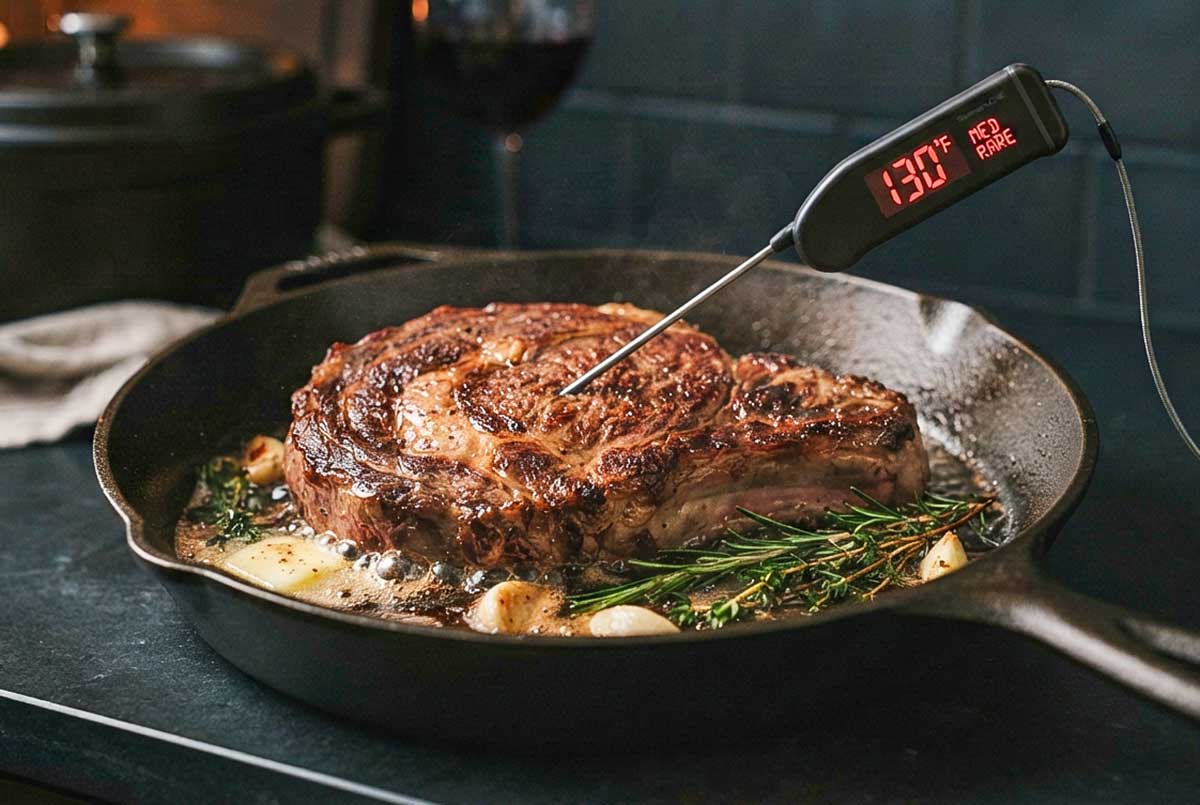
Beef Cooking Temperatures
For whole cuts of beef, including steaks and roasts, the USDA minimum internal temperature is 145°F, followed by at least a 3-minute rest.
If you prefer your beef cooked beyond the minimum temperature, you can continue cooking it to your desired level of doneness.
Beef doneness guide
For steaks and other whole cuts, these temperatures are commonly used as a guide for personal preference:
- Rare: about 125°F
- Medium-rare: about 130–135°F
- Medium: about 135–145°F
- Medium-well: about 145–155°F
- Well-done: 160°F and above
These doneness temperatures are preference-based rather than USDA safety recommendations. For food safety, USDA recommends that whole cuts of beef reach at least 145°F and rest for 3 minutes.
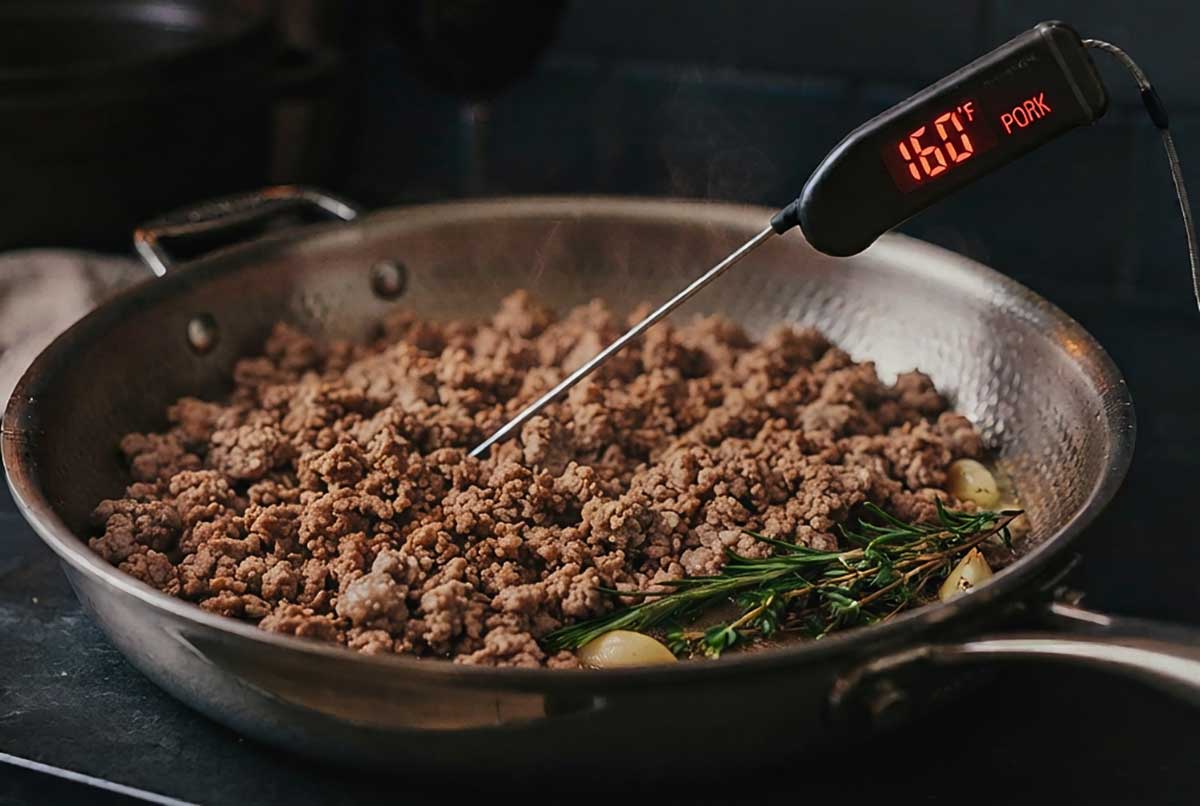
Ground beef
Ground beef should reach 160°F throughout. Because grinding can distribute bacteria throughout the meat, ground beef needs to reach a higher minimum internal temperature than an intact steak or roast.
Pork Cooking Temperature
The old recommendation to cook pork until it reaches 160°F is outdated for whole cuts.
Today, USDA recommends cooking pork steaks, chops and roasts to 145°F, followed by a minimum 3-minute rest.
Pork may still have a slightly pink center at 145°F, and that does not necessarily mean it is undercooked. Temperature, rather than color, is the better indicator of doneness.
Ground pork: Ground pork should reach 160°F.
Pork tenderloin is a lean, tender cut that cooks much differently from a larger pork loin or roast. For a flavorful example, try my Stuffed Pork Tenderloin with Spinach and Goat Cheese.
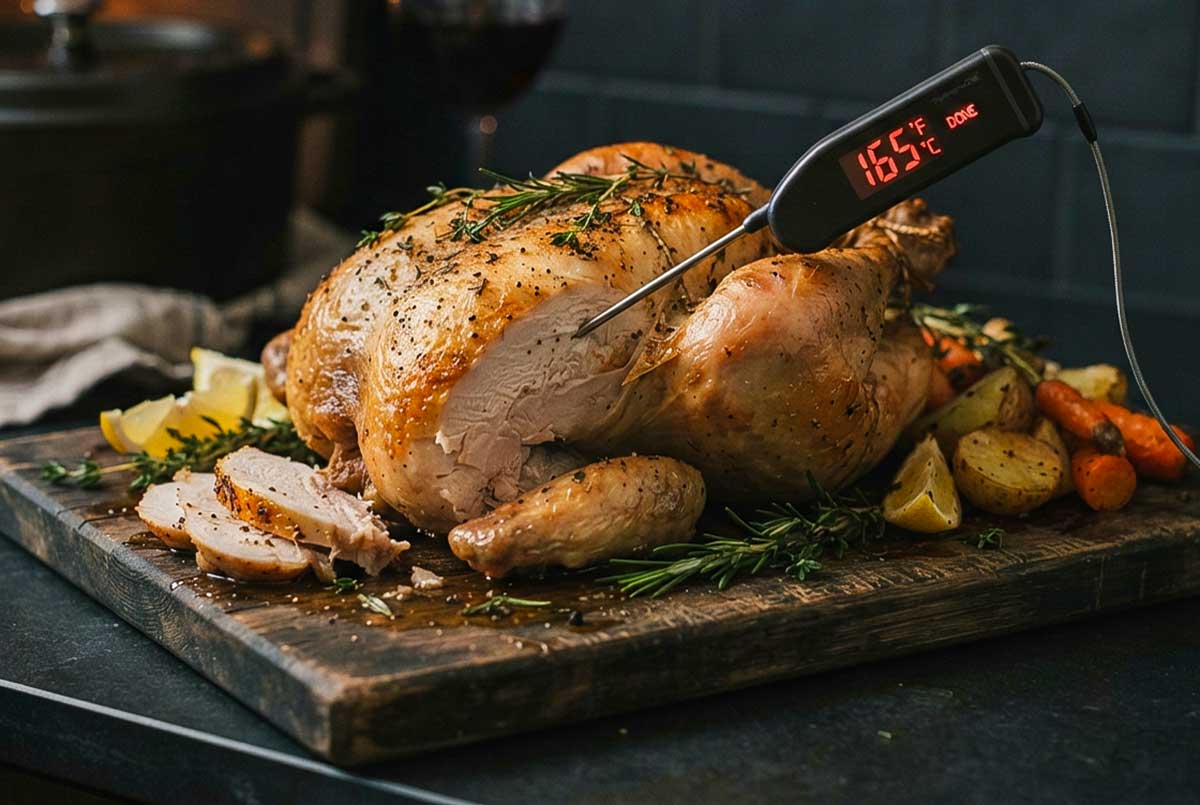
Chicken Cooking Temperature
Chicken should reach a minimum internal temperature of 165°F. This applies to whole chicken, chicken breasts, thighs, wings and other chicken pieces, as well as ground chicken.
Because chicken breast is lean, cooking it well beyond 165°F can result in a dry texture. Using a thermometer allows you to cook it to the safe minimum without unnecessarily overcooking it.
For a flavorful example of properly cooked roast chicken, try my Honey Garlic Roasted Chicken with Basil Butter Noodles. The chicken is roasted until it reaches 165°F, keeping it juicy without overcooking.
Turkey Cooking Temperature
Turkey should reach 165°F throughout.
When checking a whole turkey, use a thermometer to check the innermost part of the thigh and wing and the thickest part of the breast.
The size of the turkey affects how long it takes to cook, but temperature—not a minutes-per-pound formula—should determine when it is ready.
Lamb Cooking Temperature
Whole cuts of lamb, including steaks, chops and roasts, should reach a minimum internal temperature of 145°F, followed by at least a 3-minute rest.
Ground lamb should reach 160°F. As with beef, lamb can be cooked to a higher temperature depending on your preferred level of doneness.
If you’re cooking lamb, my Irish Lamb Stew is a great example of how browning the meat first and then slow-simmering it creates tender, deeply flavored meat.
Veal Cooking Temperature
Veal steaks, chops and roasts should reach 145°F, followed by a minimum 3-minute rest.
Ground veal should reach 160°F.
Should You Remove Meat Before It Reaches the Final Temperature?
This is where a little nuance is important.
You may have heard that meat should always be removed from the oven or grill 5–7 degrees before it reaches its target temperature because it will continue cooking as it rests. While carryover cooking can raise the internal temperature of some larger cuts, the amount varies depending on the size of the meat, cooking temperature and cooking method.
For food safety, don’t assume carryover cooking will make an under-temperature piece of meat safe. Use your thermometer to verify the appropriate safe temperature.
For large roasts, carryover cooking can be useful when you’re trying to achieve a particular level of doneness, but it should not replace checking the temperature.
Why You Should Rest Meat Before Cutting
Resting allows the temperature to stabilize and gives the juices time to redistribute before slicing.
Whole cuts of beef, pork, lamb and veal should rest for at least 3 minutes after reaching 145°F for food safety.
Larger roasts can benefit from a longer resting period for quality, but the exact amount depends on the size and type of roast.
For smaller cuts such as steaks and pork chops, a short rest is usually sufficient.
How to Get More Flavor When Cooking Meat
Temperature isn’t the only factor that affects the finished dish. Browning creates the deep, savory flavor and crust we associate with a well-seared steak or roast. Before searing meat, pat the surface thoroughly dry with paper towels. Excess surface moisture can interfere with browning.
Heat your pan before adding the meat and avoid overcrowding the pan, especially when browning smaller pieces such as stew meat. Giving each piece enough room helps the surface brown rather than steam. A good cast-iron skillet is especially useful for high-heat searing because it retains heat well.
Looking for a recipe where browning really makes a difference? Try my Instant Pot Spiced Beef Stew with Mung Beans, where the beef is seared in batches before the stew is cooked.
Do You Need to Turn Meat With Tongs?
Use tongs or another utensil that won’t pierce the meat when turning steaks, chops and other cuts.
There is no need to be overly concerned that one small puncture will suddenly drain all the juices from a steak, but repeatedly piercing meat can make handling it more difficult and can release some juices. Tongs are simply the easiest way to turn meat without puncturing it.
Meat Safety: Keep Raw and Cooked Foods Separate
Good cooking temperatures are only one part of food safety.
Keep raw meat and poultry separate from ready-to-eat foods. Wash your hands, utensils, cutting boards and work surfaces after they come into contact with raw meat.
Don’t use the same plate or cutting board for cooked meat that was used for raw meat unless it has been thoroughly washed first.
A food thermometer should also be cleaned according to the manufacturer’s instructions between uses to prevent cross-contamination.
Keep Your Cutting Board Clean
Raw meat and poultry can leave bacteria on cutting boards and other kitchen surfaces, so proper cleaning is important. After preparing raw meat, wash your cutting board, knives and countertops thoroughly before using them for other foods.
Learn more: How to Clean a Cutting Board and Keep It Clean
Preventing Cross-Contamination
If you follow a gluten-free diet, preventing cross-contact is just as important when preparing meat as it is with any other food. Cutting boards, knives, countertops, appliances and other kitchen equipment can all come into contact with gluten-containing foods.
For more tips: Gluten-Free Kitchen Guide: Cleaning Appliances, Utensils & More to Prevent Cross-Contamination.
Hi, I’m Kristina — I’ve been developing and testing gluten-free recipes in my own kitchen since 2012, with help from my very honest family.
I believe good recipes should be practical, reliable, and worth making again. I hope this guide helps take the guesswork out of cooking meat and gives you the confidence to get juicy, properly cooked results every time.
For more gluten-free recipes and cooking inspiration, join me on Pinterest, Facebook, and Instagram.