
The Best Apples for Baking and Cooking: A Practical Guide
Choosing the right apple determines whether your baked goods hold their shape or collapse into a watery purée. Because varieties react uniquely to heat, an apple that is crisp and sweet on a snacking platter might completely break down in the oven. Gluten-free baking requires precise moisture control.
Why Apple Selection Matters in Baking
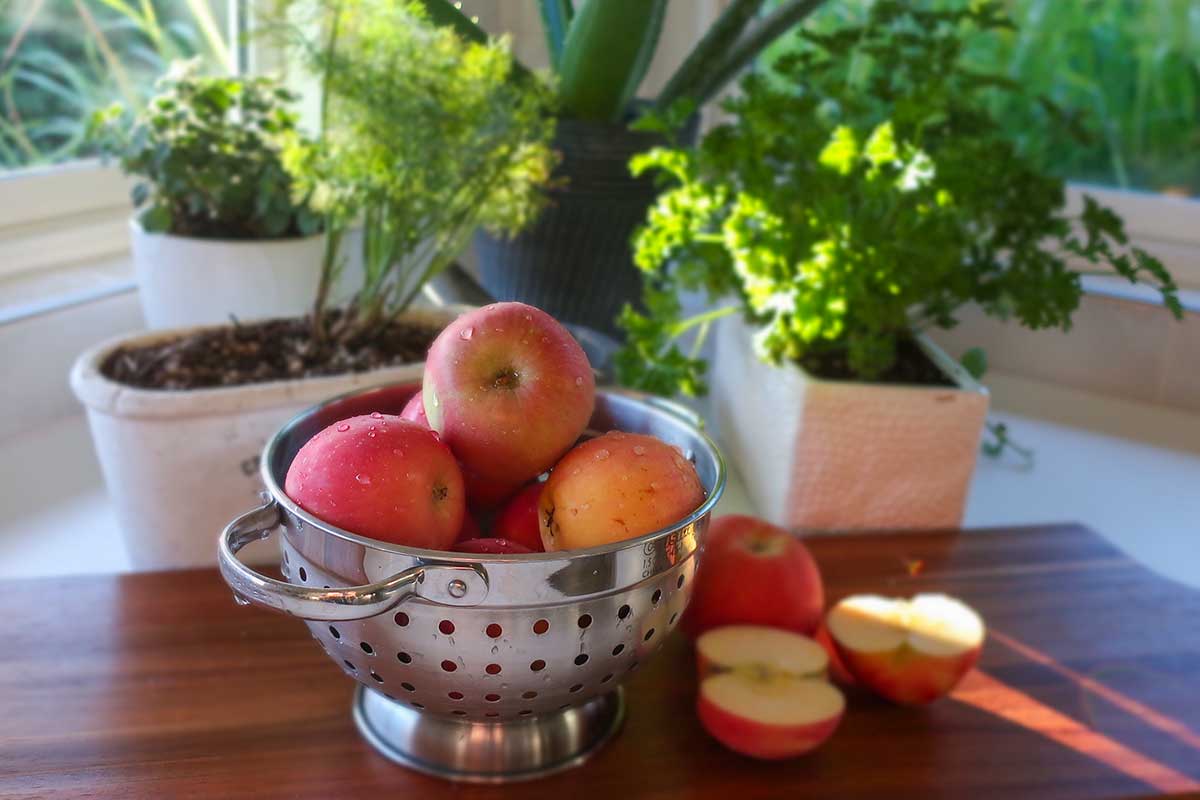
The choice of apple variety directly impacts the texture and moisture level of your baked goods. Because different apples react uniquely to heat, using the wrong variety can leave a pie or crisp watery and mushy, regardless of how precise the rest of your recipe is. For structured, flavorful results, select varieties known for holding their shape under heat.
Organic vs. Conventional Apples
Choosing organic apples is highly recommended for baking, especially when a recipe calls for unpeeled fruit. Conventional apples consistently rank among the most heavily treated crops for pesticide use. Opting for organic varieties reduces chemical residue exposure and ensures better flavor for your desserts.
Tips for Selecting Baking Apples
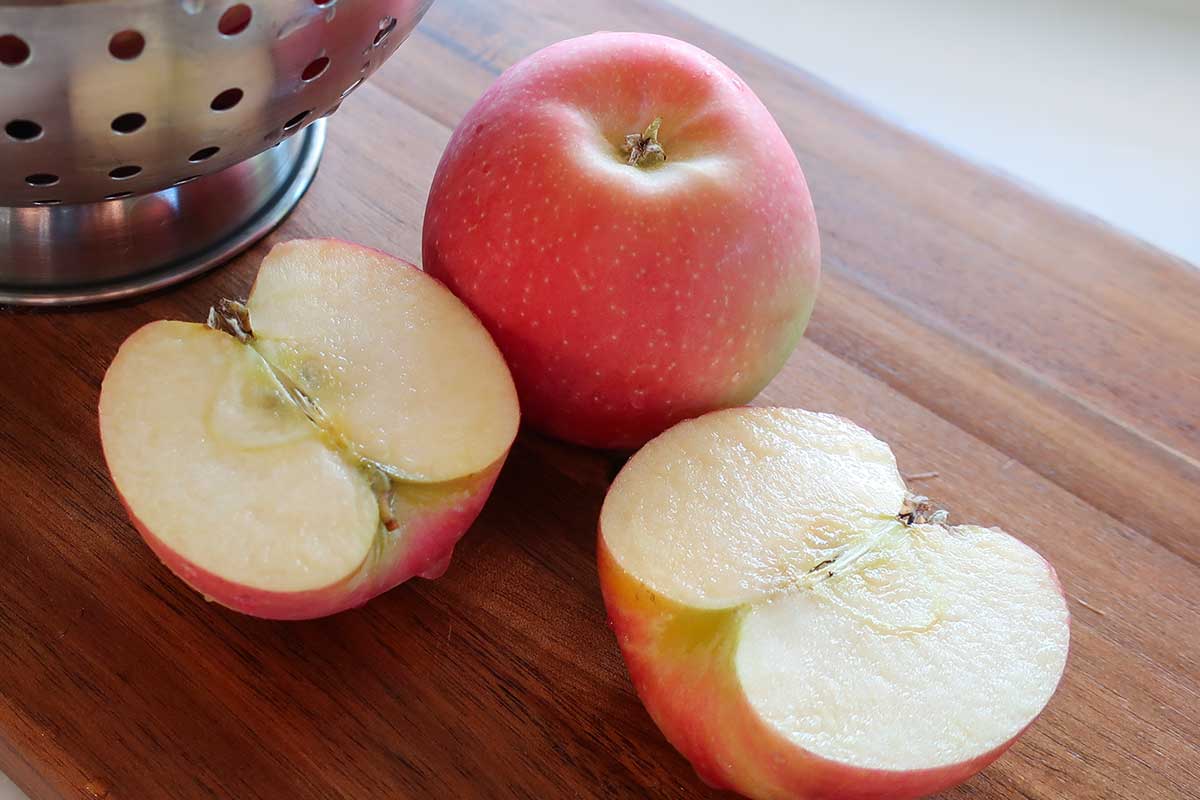
When sourcing apples for baking, prioritize structural integrity over appearance:
-
Firmness: Press firmly near the stem. The flesh must feel completely rigid. Avoid any fruit with soft spots or a spongy texture, as these will collapse under heat.
-
Density: Pick up the apple to check its weight. A heavy apple indicates it is fresh and full of moisture, whereas a light apple has begun to dry out and turn mealy.
Baking Note: Skip overripe, soft, or shrunken apples entirely. While they work well for smooth applesauce, they lack the cellular structure needed for pies, tarts, and crisps.
Proper Storage for Longevity
To preserve crispness, store apples in the refrigerator crisper drawer rather than on the counter. The cold environment significantly slows down the ripening process. Kept chilled, firm baking varieties can easily maintain their texture and moisture for several weeks.
How to Prevent Cut Apples from Browning
Oxidation causes cut apples to turn brown quickly. To keep slices looking clean while you prep, submerge them in a bowl of cold water mixed with 1 tablespoon of lemon juice per cup of water.
Alternatively, a brief soak in a mild saltwater solution (1/2 teaspoon of kosher salt per quart of water) prevents browning effectively without altering the final flavor of your baked goods once rinsed.
How to Properly Wash Apples
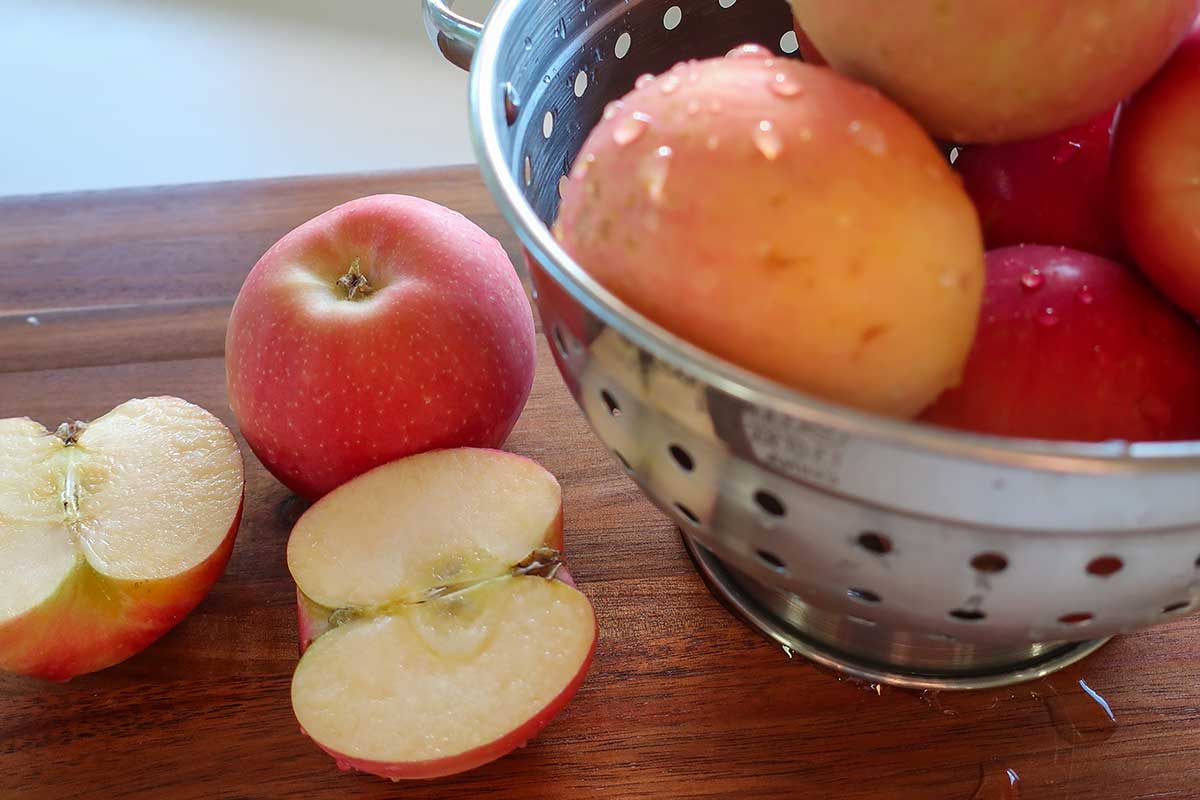
- Conventional Apples: Mix 3 parts water with 1 part vinegar to clean your apples, or use a specialized produce cleaner.
- Organic Apples: Simply wash them under clean, fresh water to remove any dirt or residues.
Apple Varieties and Their Best Uses in Cooking
Here’s a breakdown of popular apple varieties and how best to use them in your cooking:
- Braeburn: Medium-sized, crisp, juicy, and sweet-tart. Ideal for baking whole, pies, and apple compote.
- Cortland: Large, crisp, with white flesh that resists browning. Best for chunky applesauce and salads.
- Empire: Large, juicy, and fragrant with a balanced sweet-tart flavor. Great for smooth applesauce.
- Fuji: Medium-sized with firm, cream-colored flesh. Best eaten raw due to its sweet and tangy flavor.
- Gala: Medium-sized, firm, and juicy with a naturally sweet flavor. Perfect for snacking and salads.
- Golden Delicious: Medium and firm with a sweet, floral flavor. Best for gluten-free pies, apple cakes, and muffins, and chunky applesauce.
- Granny Smith: Medium-large, crunchy, juicy, and tart. A must-have for pies, gluten-free apple banana muffins, and applesauce.
- Jonagold: Large, crisp, juicy, and sweet-tart with a fragrant aroma. Ideal for pies, cakes, and crisps.
- Macoun: Medium-sized, crisp, and sweet, with a lovely fragrance. Perfect for smooth applesauce.
- McIntosh: Medium-sized, sweet, and fragrant. Excellent for making smooth applesauce.
- Pink Lady: Medium-large with creamy flesh that is juicy and sweet. Great for gluten-free apple pies, muffins, and raw eating.
- Red Delicious: Medium-large and elongated, crisp, and sweet. Best enjoyed raw.
- Rome Beauty: Large, firm, mildly tart, and fragrant. Ideal for baking whole (like in apple dumplings) and in muffins.
Gluten-Free Apple Recipes for Every Baker
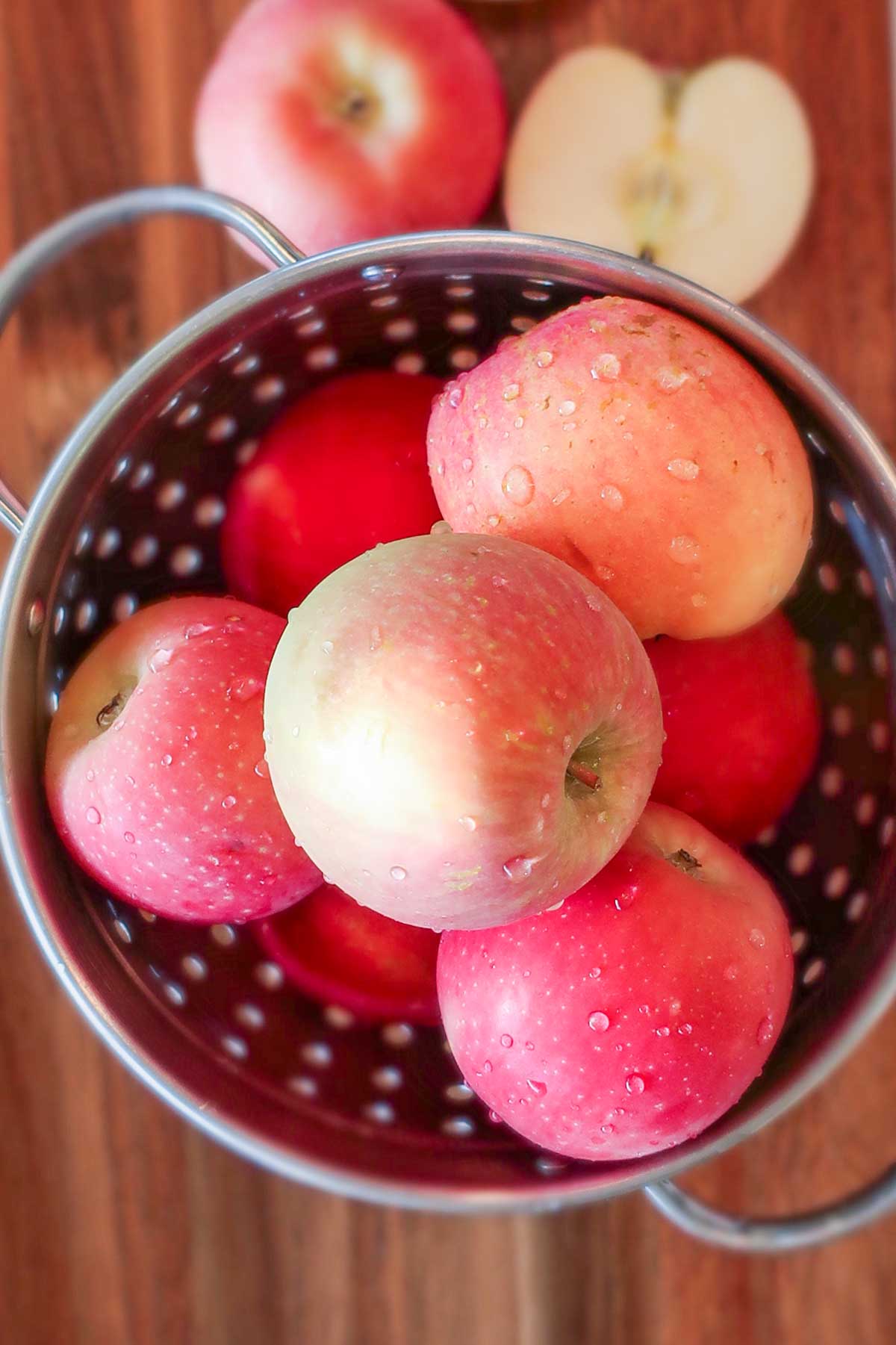
Want to get creative with apples? Explore these delicious gluten-free apple recipes to elevate your baking game and make the most of your favorite apple varieties.
Happy baking!
Kristina x