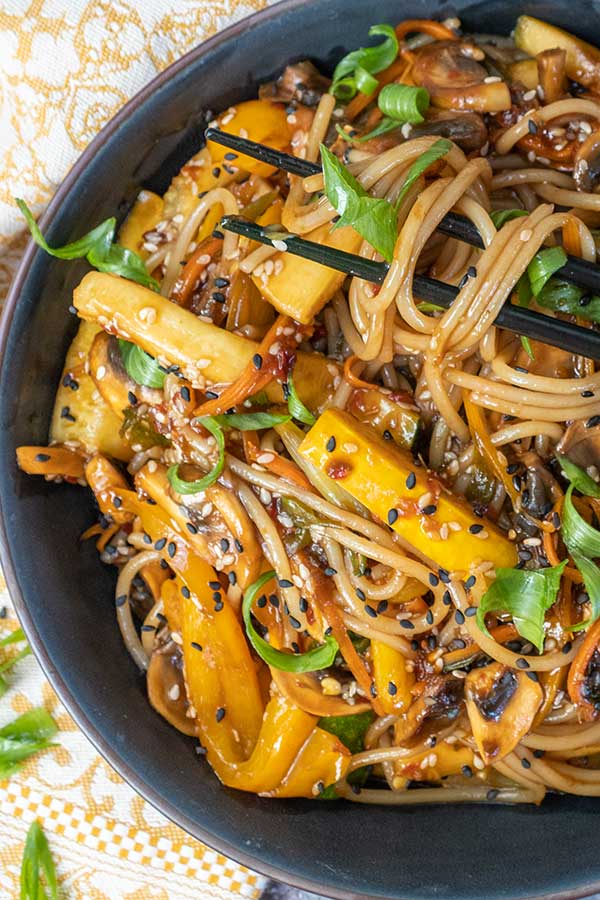
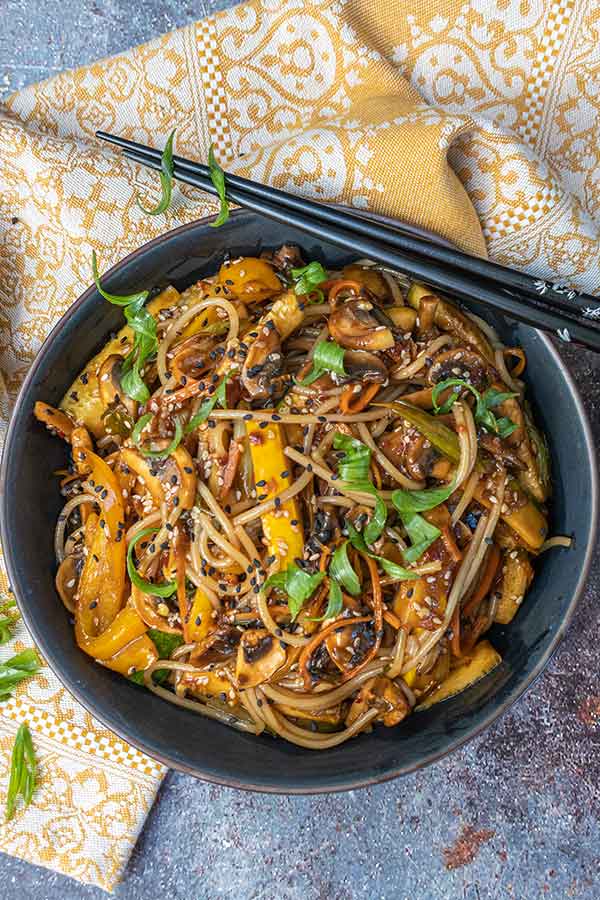
If you’ve been searching for a gluten-free noodle dish that has rich flavor, these Korean Noodles with Spicy Gochujang Sauce are exactly what you’re looking for. These vegan Korean glass noodles are tossed in a garlicky, smoky gochujang sauce with a rainbow of crisp vegetables and toasted sesame seeds. It’s the kind of weeknight dinner you’ll want on repeat
No complicated techniques, no hard-to-find ingredients , just a satisfying bowl on the table in under 25 minutes.
Why Is This Recipe a Winner
- Naturally gluten-free — Korean noodles (dangmyeon) are made from sweet potato starch, with no wheat involved
- Fully vegan — swap in any plant-based protein to bulk it up
- Customizable — use whatever vegetables are in your fridge
- Meal-prep friendly — stores well for up to 4 days and reheats beautifully
- Big on flavor — the spicy-sweet Korean sauce is addictively delicious
What Are Korean Glass Noodles?
Korean glass noodles called dangmyeon, are the chewy, translucent noodles you know from the classic Korean dish japchae. They’re made from sweet potato starch, which means they’re gluten-free by nature.
Unlike rice noodles, dangmyeon have a satisfying springy texture that holds up beautifully in stir-fries and absorbs sauces without getting mushy. They’re available in most Asian grocery stores and online, usually sold dried in long bundles.
Check the label: Most dangmyeon are gluten-free, but always verify the packaging if you have celiac disease, as some brands are processed in shared facilities.
The Vegetables For Korean Noodle Bowls
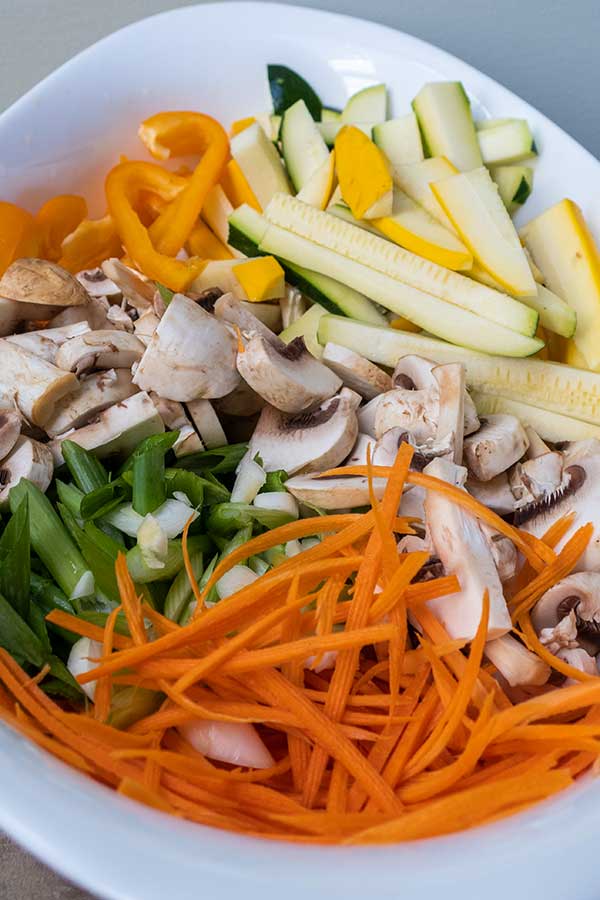
Use this recipe as a template. The original uses bell peppers, carrots, mushrooms, zucchini, and green onions, a classic combination. But you can easily customize:
Great additions for todays pantries:
- Broccolini — slightly crisp and pairs beautifully with sesame
- Shredded purple cabbage — adds color and crunch
- Snap peas — sweet and crisp
- Baby spinach — stir in at the very end; it wilts in seconds
- Shiitake mushrooms — earthier and more complex than button mushrooms
- Edamame — an easy protein boost that keeps the dish vegan
The key: slice everything thin and uniformly so it cooks evenly in the 3-minute stir-fry window.
The Sauce — What Makes This Recipe

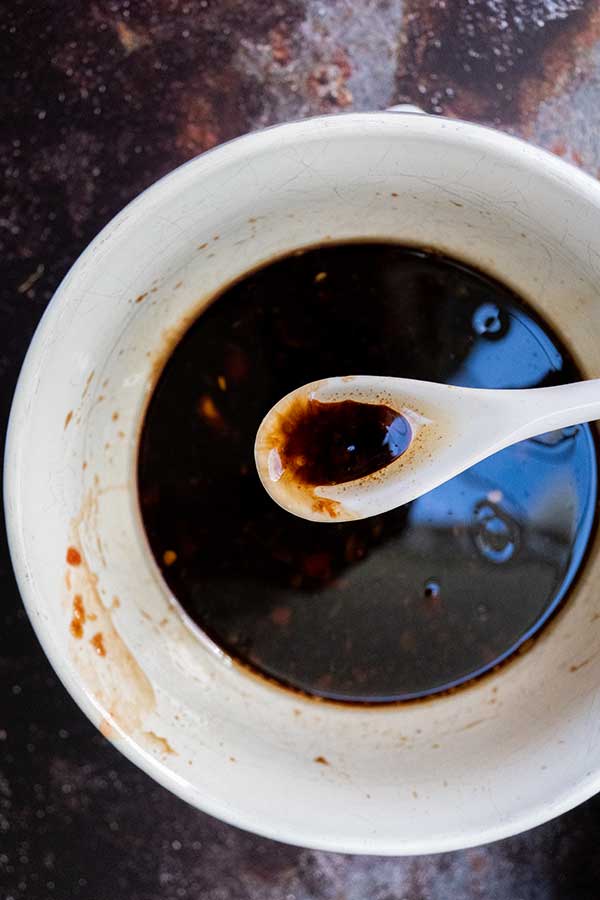
The sauce is a punchy balance of savory, sweet, tangy, and spicy. Here’s what each ingredient does:
- Gluten-free tamari — the savory base (use coconut aminos for a lower-sodium option)
- Pure maple syrup — adds sweetness and helps the sauce caramelize slightly
- Rice vinegar — cuts the richness and adds a subtle tang
- Gochujang (Korean chili paste) — smoky, deep, fermented heat, the soul of the sauce
- Toasted sesame oil — nutty richness that ties everything together
- Fresh garlic — essential, don’t skip it
Spice level: Gochujang is moderately spicy. Start with 1 tablespoon if you’re heat-sensitive, or go up to 3 tablespoons if you love bold heat. Always confirm your gochujang brand is certified gluten-free, many Korean brands contain wheat.
How to Make Gluten-Free Korean Noodles (Step by Step)
Step 1 – Cook the noodles
Boil the glass noodles according to package directions (usually 6–8 minutes). Drain, rinse with cold water to stop cooking, and toss with a tiny drizzle of sesame oil to prevent sticking. Set aside.
Step 2 – Make the sauce
Whisk together the tamari, maple syrup, rice vinegar, gochujang, sesame oil, and minced garlic in a small bowl. Taste and adjust, more maple syrup for sweetness, more gochujang for heat.
Step 3 – Stir-fry the vegetables
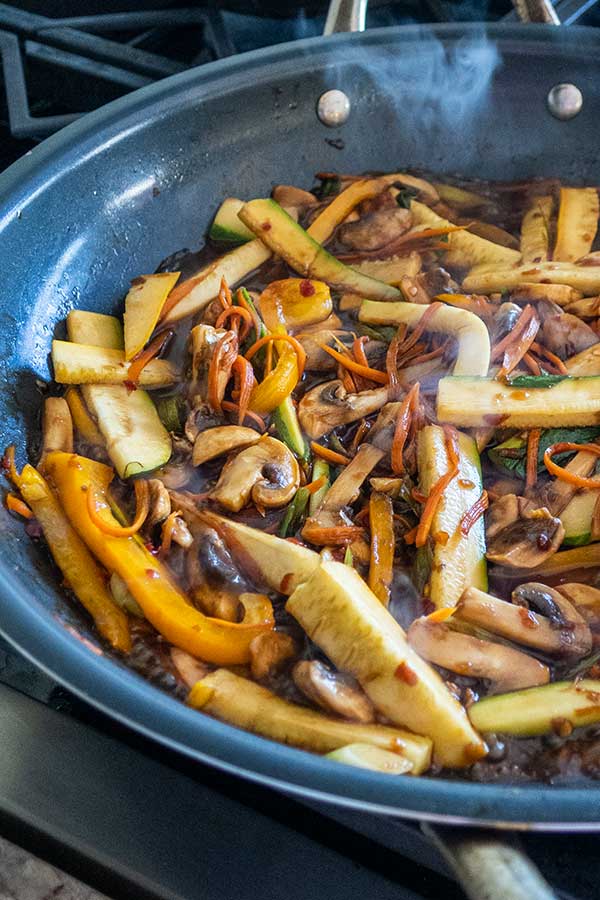
Heat sesame oil in a large wok or skillet over medium-high heat. Add your vegetables (hardest ones first — carrots and bell peppers, then mushrooms, then zucchini and green onions). Stir-fry for about 3 minutes until just tender but still with some bite.
Step 4 – Add half the sauce
Pour half the sauce over the vegetables and cook for 1 minute, tossing to coat. This flavors the vegetables without leaving you sauceless at the end.
Step 5 – Add noodles + finish
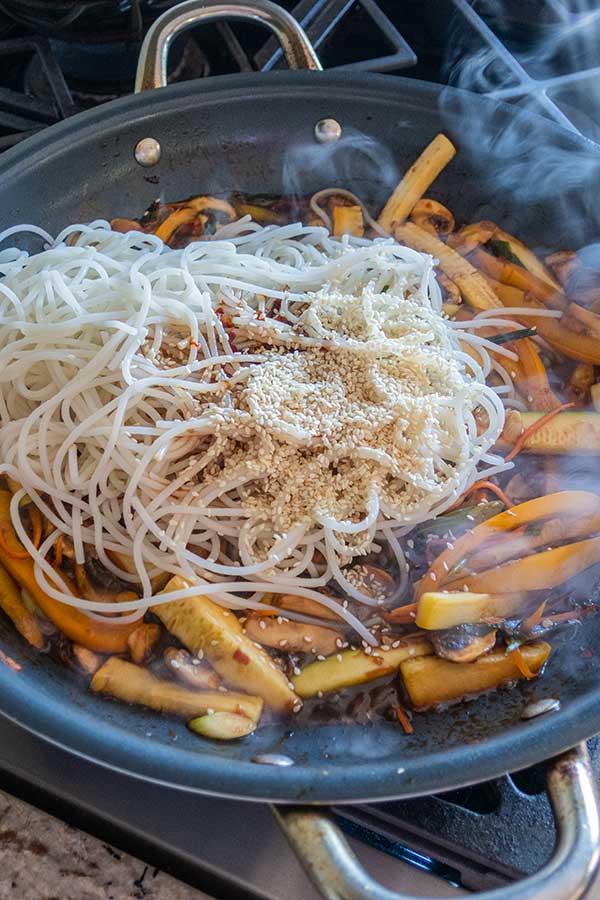
Add the cooked noodles, sesame seeds, and remaining sauce. Toss gently with tongs glass noodles can break if you’re too aggressive. Cook until heated through, about 2 minutes.
Step 6 – Rest and serve
Take the pan off the heat and let everything sit for 5 minutes. This is the secret step, the noodles absorb the remaining sauce and become even more flavorful. Serve in bowls topped with extra sesame seeds and thinly sliced green onions.
Add Protein (Keep It Vegan or Not)
This dish is satisfying on its own, but you can easily add protein:
Vegan options:
- Crispy Tofu With Spicy Ginger Sauce (press it first for best texture)
- Shelled edamame stirred in with the noodles
- Soft-scrambled egg (if vegetarian rather than vegan)
- Tempeh, crumbled or cubed
Non-vegan options:
- Thinly sliced beef (bulgogi-style) — add before the vegetables
- Shrimp — add after the vegetables and cook 2 minutes
- Shredded rotisserie chicken — stir in with the noodles
Serving Suggestions
These noodles are a complete meal on their own, but here’s what pairs well:
- Vegan kimchi — the fermented tang cuts through the richness perfectly
- Simple cucumber salad — thinly sliced cucumber with rice vinegar, sesame oil, and a pinch of salt
- Miso soup — light and warming alongside the bold noodles
- Steamed edamame — simple, satisfying, and keeps the meal plant-based

Storage and Meal Prep Tips
- Fridge: Store in an airtight container for up to 4 days. The noodles will absorb more sauce as they sit — this is a good thing.
- Reheat: Add a splash of water or tamari and reheat in a skillet over medium heat, or microwave covered for 2 minutes.
- Freezing: Not recommended — glass noodles become mushy after freezing and thawing.
- Meal prep: Make a double batch of the sauce and keep it in a jar in the fridge for up to 2 weeks.
More Gluten-Free Asian Noodle Recipes You’ll Love
Two of my favorites are Gluten-Free Shanghai Buckwheat Noodles (Vegan), and Gluten-Free Spicy Chinese Noodles, both are delicious noodle bowl recipes worth trying.
Frequently Asked Questions
Are sweet potato glass noodles the same as dangmyeon? Yes, dangmyeon is the Korean name for sweet potato glass noodles. They’re the same product and are interchangeable in this recipe.
Can I use rice noodles instead? You can, but the texture will be different, softer and less chewy. Rice vermicelli works well, flat rice noodles can get sticky. Glass noodles are worth seeking out for the best result.
This Gluten-Free 20-Minutes Korean Noodles with Spicy Gochujang has been created and tested by Kristina gluten-free recipe developer. If you enjoyed this recipe, I’d love to hear from you! Please leave a ⭐ star rating and a quick review, it really helps others discover these recipes.
For more daily inspiration, be sure to follow us on Pinterest or join us on Facebook. And don’t forget to sign up for our newsletter so you never miss a recipe. We always have something delicious coming next!
Published: August 20, 2022 | Updated: 2026 | By Kristina Stosek






Comments
Sheila Katt-Beck
I can’t find the recipe for the sauce ?? I see the picture. No recipe? Did I miss it?
Sheila the recipe is at the bottom of the post