Okay, hear me out: this Plant-Based Gluten Free Carrot Cake might just be my favorite creation. It’s vegan and gluten-free, but don’t let that fool you — it’s ridiculously moist and fluffy. We’re talking grated carrots, sweet pears, a handful of raisins, and those warm spices that make your kitchen smell so good. And that coconut buttercream on top? Let’s just say total win. Whether you’re dairy-free, gluten-free, or just cake-curious, this one’s guaranteed to disappear fast.
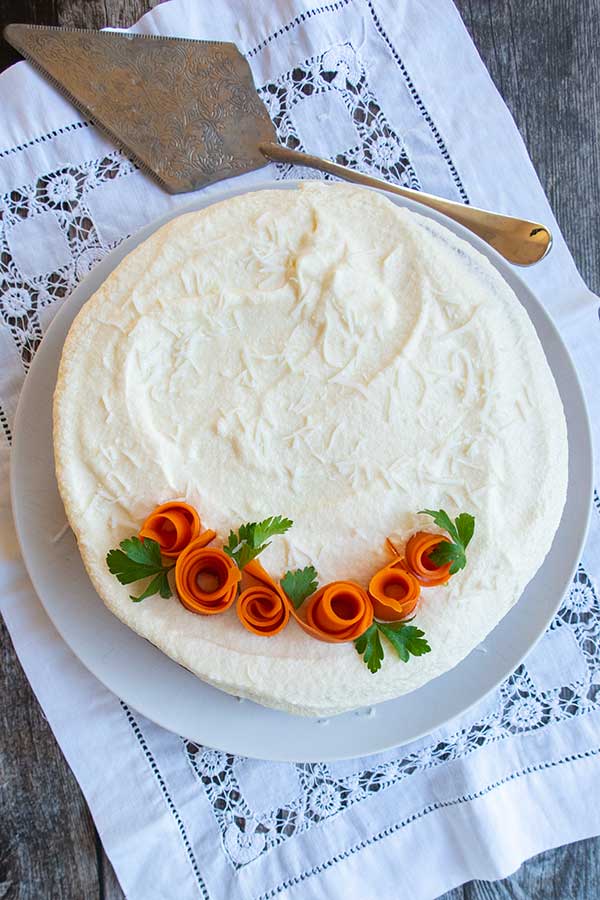
The Carrot Cake That Does It All
A good carrot cake should make you stop mid-bite and go, wait, how is this so good? This traditional dessert without gluten has a way of showing up for every celebration — Thanksgiving, Easter, Christmas, even birthdays — basically, if there’s a table, this cake belongs on it.
And the best part? It’s vegan and gluten-free, so this plant-based dessert fits most diets (no one will even notice it’s the “healthy” dessert). Consider this your go-to recipe for any occasion that calls for a little sweetness and impossible not to love.
How to Prep Carrots So Your Cake Turns Out Perfect
The magic starts with the carrots, so here’s the deal: the finer you grate them, the better your cake will be. You can use my favorite food processor, a box grater, or this easy to use mandoline if you’re feeling fancy. Smaller bits of carrot melt right into the batter, keeping your cake soft, evenly textured, and perfectly moist.
Give your carrots a good rinse first. If they’re organic, a quick scrub under running water does the trick. If not, go ahead and peel them to get rid of any dirt or residue — no one wants that in their dessert.
Once they’re ready, toss the grated carrots in with your dry ingredients and raisins before you add the wet stuff. It might sound like a small step, but it helps the carrots spread out evenly so every bite gets a little sweetness and texture.
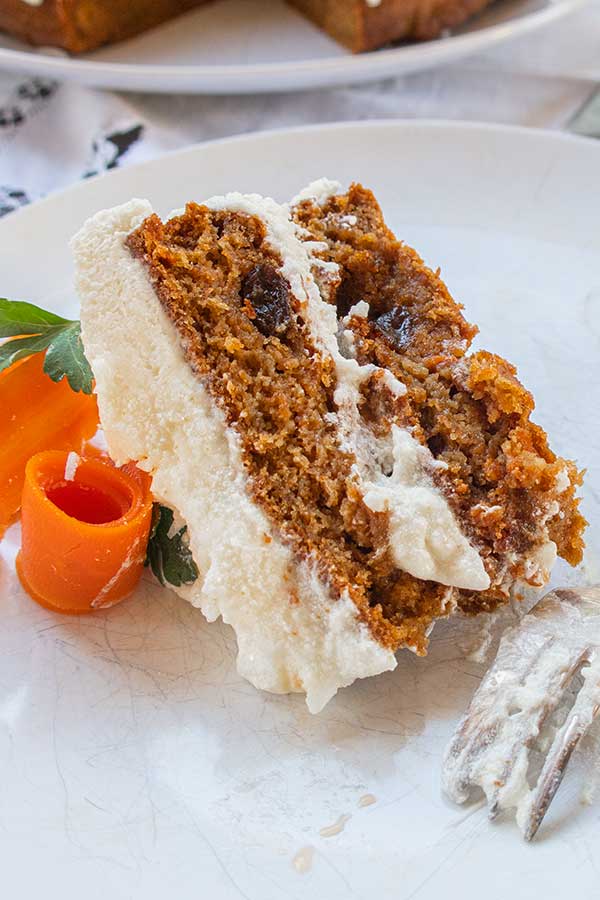
Maple Syrup or Coconut Sugar? Let’s Settle This
Ah, the great sweetener debate. When it comes to making the perfect gluten-free, vegan carrot cake, your choice between maple syrup and coconut sugar actually makes a bigger difference than you’d think.
First up — sweetness. Maple syrup definitely brings more of it, so if you’ve got a sweet tooth, that’s your winner.
Then there’s flavor. Maple syrup adds a mild maple flavor that goes well with the spices and carrots, while coconut sugar keeps things more mellow and classic.
And finally — texture. Coconut sugar gives you a slightly denser, heartier crumb, while maple syrup lightens things up and keeps the cake extra tender.
So which one’s best? Honestly, it’s all about what you’re craving. Go for maple syrup if you want a sweeter, softer cake with that cozy hint of maple. If you’re after something a touch more wholesome and subtly sweet, coconut sugar’s your best friend.
Choosing the Right Flour for Your Carrot Cake
Flour might not sound exciting, but in a plant-based carrot cake, it totally changes the texture. Almond flour and oat flour are both amazing gluten-free options, each with their own little personality.
If you need a nut-free version, oat flour’s your best bet — it keeps things simple and still delivers great texture. Almond flour, on the other hand, brings that rich, moist crumb that makes every bite feel a little extra indulgent.
Want a cake with a bit more structure and a hearty feel? Go for certified gluten-free oat flour. Craving something softer and more moist? Almond flour is the way to go.
In the end, you can’t really go wrong — it just depends on what kind of carrot cake mood you’re in.
The Magic of Lemon Juice in Carrot Cake
A little lemon juice goes a long way in making your carrot cake extra tasty. It adds that tang that goes well with all the warm spices and keeps the dessert fresh tasting. Plus, it helps lock in moisture so your cake stays soft instead of drying out — no sad, crumbly slices here.
One Pan or Layers? Let’s Talk Cake Strategy
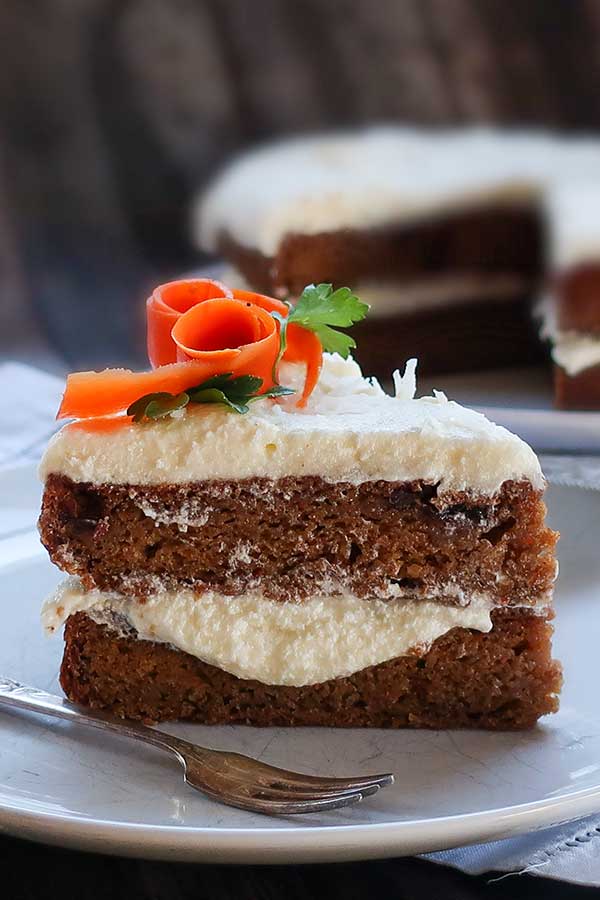
So, the big question: are you going for a single, cozy cake with frosting on top — or a tall, layered showstopper? Both have their perks (and a few quirks), so here’s the rundown.
Using one cake pan is nice and simple, but it’ll take a bit longer to bake and won’t rise quite as high. Plus, if you want layers, you’ll have to cut the cake yourself — and let’s be honest, getting perfectly even rounds is a whole art form.
If you go with two or three pans, your cake bakes faster, turns out taller, and you skip the nerve-wracking slicing part altogether. Personally, I’m team multiple pans — less stress, more cake.
And hey, if you’re in the mood for something more casual, you can pour the batter into a 9×13-inch pan and make it a vegan, gluten-free snacking cake. Just adjust the baking time to match your pan size — the top should be a deep golden brown, and a toothpick in the center should come out clean.
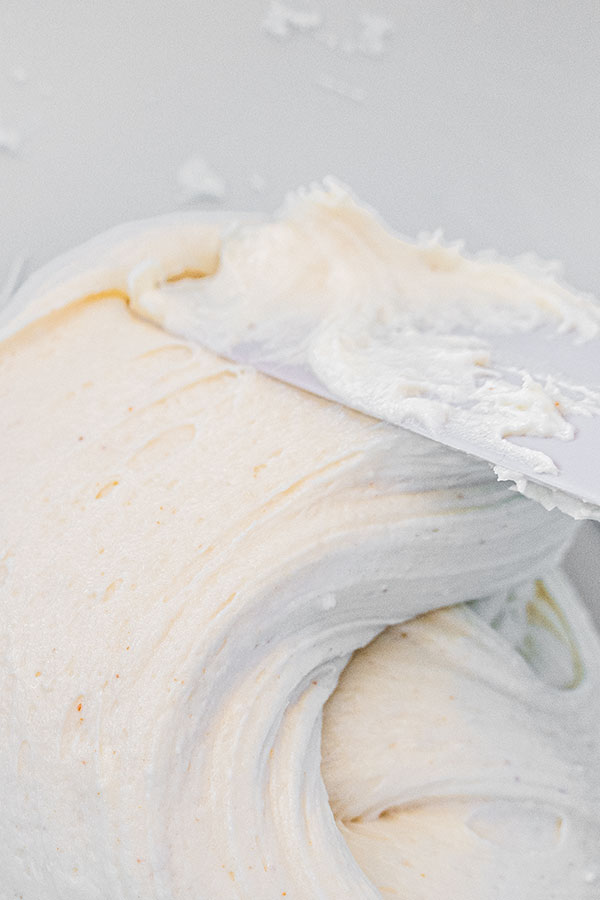
Frosting Time — The Grand Finale
Now for the best part: frosting! You can go classic with a plant-based cream cheese version — rich, tangy, and always a crowd-pleaser — or switch things up with a coconut frosting for a lighter, subtly tropical twist that pairs perfectly with the spices.
Whichever route you take, just remember: carrot cake is really just an excuse to enjoy a generous layer (or two) of frosting. No judgment here.
Vegan Cream Cheese Frosting Recipe
- 1 cup vegan cream cheese, softened
- 1/4 cup unsalted vegan butter, softened
- 1 tsp. vanilla extract
- 3 – 4 cups powdered sugar
- 2 Tbsp. plant-based milk
- 1 Tbsp. Fresh lemon juice
In a large bowl, cream the cheese and butter until light and fluffy. Mix in the vanilla extract, then gradually add in the powdered sugar and milk until the desired consistency is reached. Finally, add the lemon juice at the end.
Vegan Coconut Buttercream Frosting Recipe
- 3/4 cup unsalted vegan butter, softened
- 3 – 4 cups powdered sugar
- 4 Tbsp. coconut milk or plant-based milk
- 2 Tbsp. fresh lemon juice
- 1/4 – 1/2 cup grated coconut
Beat butter until creamy. Then gradually add in the powdered sugar alternating with milk until the desired consistency is reached. Finally, add lemon juice and coconut and mix to combine.
Place the frosting in the fridge for 20 minutes before spreading it on the cake. You can also buy a ready made vegan gluten free vanilla frosting
And who can say no to a slice of frosted cake packed with veggies and fruit? Or, if you like a vegan chocolate cake try this No-Bake Chocolate Silk Cake recipe. YUM!
Easy Plant-Based Swaps That Actually Work
Whether you’re out of something or just keeping things plant-based, here are some simple ingredient swaps that won’t mess with your carrot cake recipe.
-
Eggs: Swap 1 tsp psyllium husk powder for 2 Tbsp ground flaxseed — it binds beautifully and keeps the cake moist.
-
Grated pear: Try unsweetened applesauce, drained crushed pineapple, or pumpkin purée (a food processor makes this super easy).
-
Plant-based milk: Any will do — almond, soy, rice, coconut, hemp, or oat.
-
Nutmeg: Out of it? Use grated ginger or a pinch of ground cloves for a cozy spice kick.
-
Olive oil: Swap for melted coconut oil if you prefer a richer flavor.
-
Maple syrup: Replace ½ cup maple syrup with 1 cup coconut sugar, light brown sugar, or white sugar.
-
Raisins: Not a fan? Go for chopped nuts like walnuts, pecans, or almonds instead.
-
Almond flour: Sub with certified gluten-free oat flour for a nut-free option.
-
Gluten-free flour blend: Any mix with xanthan gum (and no bean flour) will work just fine.
-
Lemon juice: You can swap in apple cider vinegar, orange juice, or pineapple juice — all add a bright little kick.
Because at the end of the day, great baking isn’t about rules — it’s about making what you’ve got work deliciously.
decorating carrot cake
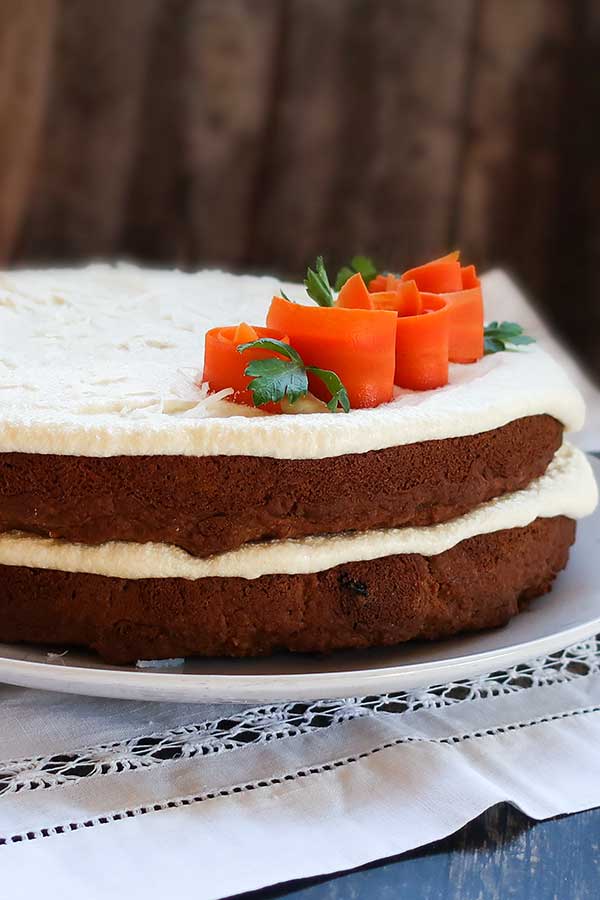
If you are serving this gluten-free dessert for a special occasion, you can make it pretty by adding carrot roses, small parsley leaves, fresh rosemary, a sprinkle of coconut flakes, or finely chopped walnuts. Or use orange and green food coloring in some of the frosting and create miniature carrots.
Turning Carrots into Roses (Yes, Really)
Find a nice thick carrot (about 7–8 inches long) and peel it. Using a vegetable peeler, press lightly at the root end and drag down the length to create thin ribbons — skip the first few uneven ones.
In a skillet, bring about 1–2 cups of water and 2 tablespoons of sugar to a boil (you want roughly an inch of liquid). Drop in the carrot strips and simmer for 30 seconds, then remove from heat. Once they’re cool enough to handle, drain off the syrup and start rolling the strips into roses — begin with the skinny end for a tight bud, then layer more ribbons until they look full and petal-y. Tuck the end underneath and gently press the base of each rose into the frosting.
How to Make Your Carrot Cake Last
If your cake has a cream cheese or butter-style frosting, it needs to be refrigerated. Cover it with plastic wrap or pop it into a beautiful cake dome to keep it from drying out.
Freezing for Later
Good news — this plant-based, gluten-free carrot cake freezes like a dream. Just wrap the whole cake or individual slices tightly in plastic wrap, then tuck them into a freezer bag. They’ll keep beautifully for up to two months.
When you’re ready for a treat, let the cake defrost in the fridge overnight. It tastes just as moist and delicious as the day you made it — maybe even better, because you didn’t have to bake it twice. (haha)
If you are into carrot desserts, you may also enjoy my Amazing Gluten Free Pumpkin Carrot Cake
or, why not try our popular Gluten-Free No Bake Carrot Cake!
Final Thoughts
This plant-based, gluten-free carrot cake checks all the boxes — soft, moist, and full of flavor. The almond and gluten-free flours keep it light, while the carrots and pears bring natural sweetness and just the right balance.
It’s a wholesome twist on a classic dessert that feels indulgent without trying too hard. If you’re after a plant-based cake that everyone (yes, even the non–plant-based folks) will love, this one’s it.
Let’s Connect!
Be sure to FOLLOW US on FACEBOOK and PINTEREST. And don’t forget to sign up for our newsletter. We always have something new and exciting for you!
Many thanks!
Kristina xx


Comments
Natasha
The best gluten free carrot cake recipe I have tried and vegan even better!
I am so happy to hear that, yes it is mine as well. Thank you, Kristina