This gluten-free ciabatta has a crisp, golden crust and a soft, airy crumb with the slightly chewy texture you’d expect from an Italian-style loaf. The flavor is mild and savory, making it a versatile bread for dipping, sandwiches, garlic bread, or serving alongside soups and stews.
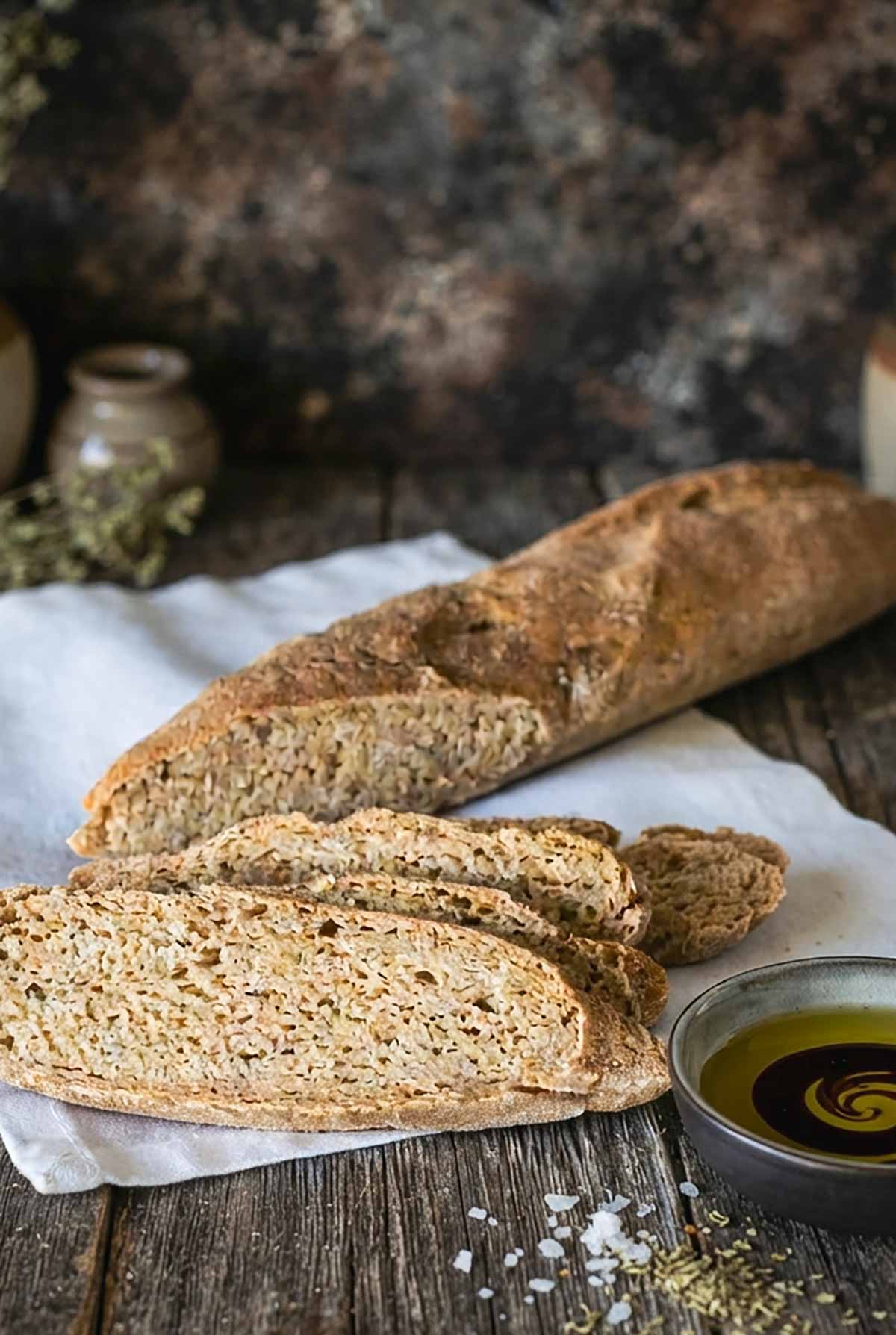
The dough is naturally egg-free, and the combination of rice flour, oat flour, and tapioca starch gives the bread a lighter crumb than many gluten-free loaves.
Why You’ll Love This Gluten-Free Ciabatta
- Crisp golden crust: Baking at high heat gives the loaves a beautifully browned exterior.
- Light, airy crumb: The higher-hydration dough helps create the characteristic open texture of ciabatta.
- Egg-free: No eggs are needed for this recipe.
- Versatile: Use it for sandwiches, garlic bread, dipping, or alongside soups and stews.
- Freezer-friendly: The baked loaves can be frozen for longer storage.
What Is Ciabatta Bread?
Ciabatta is a rustic Italian bread known for its elongated, flattened shape, crisp crust, and open crumb. The dough is wetter than traditional bread dough, which helps create its characteristic irregular holes and lighter texture.
Ciabatta vs. Focaccia
Both are Italian breads, but they have very different textures and shapes. Ciabatta is formed into loaves and has a crisp crust with an airy, open crumb. Focaccia is generally baked as a flatter bread with a softer interior and a more pronounced olive-oil flavor.
Key Ingredients and Swaps
- Rice flour: Provides a light base for the bread. If substituting, use another gluten-free flour by weight, not by volume, as different flours have different densities.
- Certified gluten-free oat flour: Adds structure and a mild flavor. Sorghum or millet flour can be substituted by weight, not by cup, to keep the flour ratio consistent.
- Tapioca starch: Helps create a lighter, more elastic crumb. Arrowroot can be substituted by weight rather than volume.
- Xanthan gum: Helps provide structure and hold the loaf together in the absence of gluten.
- Instant yeast: Gives the bread its rise and airy texture. Use rapid-rise or instant yeast.
- Olive oil: Adds moisture and richness to the crumb.
- Apple cider vinegar: Helps balance the dough and contributes to its texture.
- Sweetener: A small amount balances the flavor and supports yeast activity. Sugar, fine coconut sugar, maple syrup, or honey can be used.
For flour substitutions: Gluten-free flours and starches vary considerably in weight per cup. If making a substitution, use the same weight as the original ingredient rather than substituting cup-for-cup. This helps maintain the intended flour-to-liquid ratio and dough consistency.
Gluten-Free Reminder: Make sure all packaged ingredients you use are labeled gluten-free or verified by the manufacturer.
Tips and FAQs
Why is gluten-free ciabatta dough so wet?
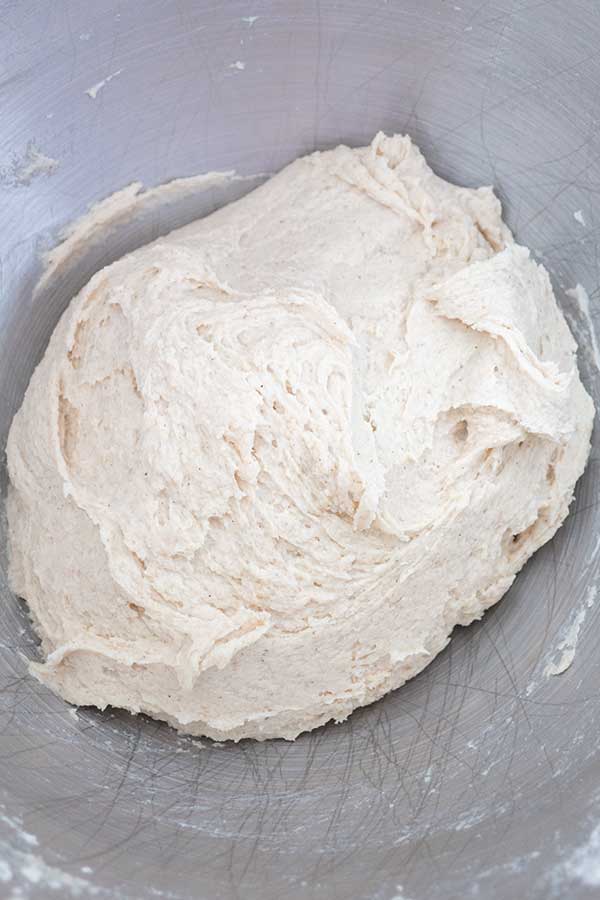
Ciabatta traditionally uses a higher-hydration dough, and gluten-free dough needs additional moisture to produce a lighter crumb. Avoid adding extra flour simply because the dough feels sticky.
Can I make this without a stand mixer?
Yes. Mix the dough thoroughly with a sturdy rubber spatula or wooden spoon. Because the dough is soft and sticky, you don’t need to knead it like traditional wheat bread.
Rest the dough before shaping!
Let the mixed dough rest for 15 minutes before shaping. This gives the rice flour time to absorb some of the moisture, helping the dough become easier to handle and shape and creating a lighter crumb.
Why did my bread spread instead of holding its shape?

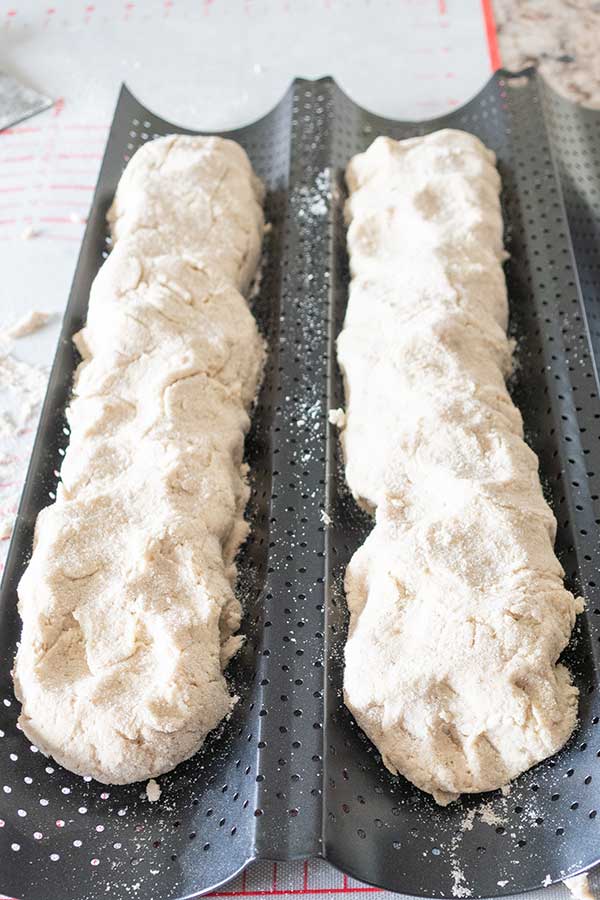
Gluten-free dough is sensitive to hydration and proofing. Too much water, over-proofing, or insufficient structure can cause the loaves to spread. Measure the flours carefully and allow the loaves to rise until noticeably puffy rather than waiting for them to double. Ultimately use a French bread pan.
Can I make this without a French bread pan?
Shape the dough into two elongated loaves, approximately 8 inches long, and place them on a parchment-lined baking sheet about 2 inches apart. Keep the loaves separate so they do not merge as they rise and bake. They may spread slightly more than they would in a French bread pan.
Gluten-free ciabatta dough is wet, sticky and soft. With proper kitchen tools such as a stand mixer with a dough hook, pastry mat, dough scraper and preferably French bread pan, even novice bakers will succeed with ease.
How to Serve Gluten-Free Ciabatta
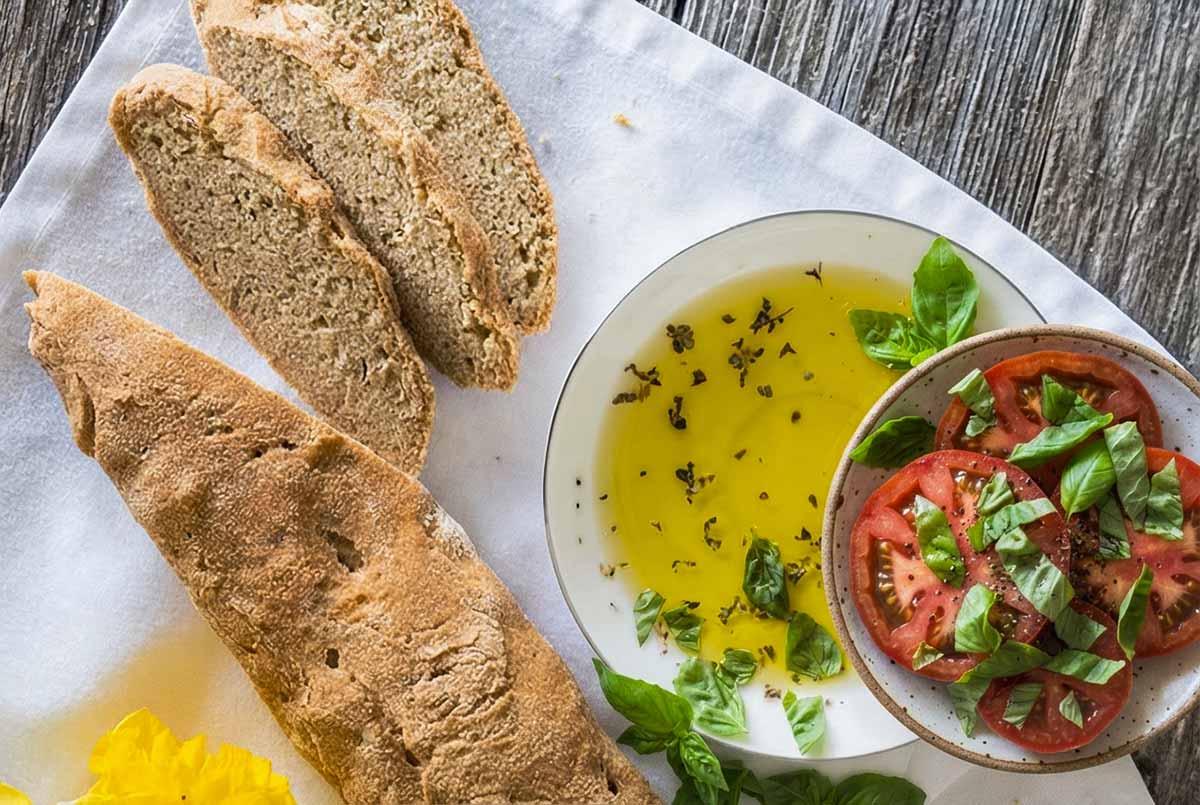
Slice the ciabatta for sandwiches, use it to make garlic bread, or serve it with olive oil for dipping. It is also excellent alongside soups, stews, dips, and hearty salads.
For an Italian-style appetizer, slice the bread, toast it, and top with tomatoes, herbs, roasted vegetables, or your favorite gluten-free toppings.

Storing and Freezing
Once completely cooled, wrap the bread well and store it at room temperature for up to 3 days. Avoid refrigerating it, as the bread can dry out more quickly.
To freeze, wrap the cooled loaves tightly in plastic wrap followed by foil, or place them in a freezer-safe bag. Freeze for up to 2 months.
For easier serving, you can also slice the bread before freezing and remove individual slices as needed.
How to Reheat Gluten-Free Ciabatta
For the best texture, wrap the bread loosely in foil and heat in a 350°F oven for about 10–12 minutes.
If frozen, thaw the loaf in the refrigerator overnight before reheating. Individual slices can be toasted directly from frozen.
You may also enjoy my Gluten-Free Homemade Italian Bread, or my favorite Gluten-Free Italian Parmesan Bread.
Hi, I’m Kristina, a gluten-free recipe developer creating and testing recipes since 2012. Every recipe on this site is made in my kitchen and personally tested (with the help of my very honest family!).
Did you make this recipe? I’d love to hear how it turned out! Leave a ⭐⭐⭐⭐⭐ rating and a quick review below, it helps other gluten-free cooks discover recipes they can trust.
Looking for more gluten-free inspiration? Subscribe to the newsletter for new recipes delivered straight to your inbox — no spam, just good food. You can join our community on Pinterest, Facebook, and Instagram.



Comments
Liana R
This is the 2nd time I have made this recipe and it is such a big hit! Thank you for helping us Celiacs feel like we're not missing out any longer. So delicious!
thank you Liana xx