Gluten-Free Kung Pao Chicken (Better Than Takeout!)

11 Reviews
Published Jul 13, 2020 ∙ Kristina Stosek

This post may contain affiliate links, please see our privacy policy for details.

This Gluten-Free Kung Pao Chicken is better than takeout! Tender chicken pieces are oven-roasted until lightly browned, then tossed in a thick, sticky homemade Kung Pao sauce that’s sweet, savory, slightly tangy, and has just the right amount of heat. Finished with crunchy cashews, this flavorful Chinese-inspired chicken dish is an easy way to satisfy your takeout cravings at home.

gluten free Kung Pao Chicken with cashews served along side fried rice topped with sliced green onions

Why You’ll Love This Gluten-Free Kung Pao Chicken

No deep-frying required: The chicken is roasted in the oven rather than fried in batches, making preparation easier and reducing the amount of oil needed.

Homemade Kung Pao sauce: The sauce has a delicious balance of sweet, savory, tangy, and spicy flavors, with a thick consistency that coats the chicken beautifully.

Better than takeout: Freshly prepared chicken, crunchy cashews, and homemade sauce give this dish take-out style flavor without needing to order from a restaurant.

Quick and easy: The chicken and sauce come together in approximately 30 minutes, making this a practical weeknight meal.

Easy to customize: Adjust the chili flakes to your preferred heat level and choose chicken breasts or thighs.

Gluten-Free Kung Pao Chicken (Better Than Takeout!) alongside fried rice in a bowl topped with cashews

Key Ingredients for Kung Pao Chicken

Chicken thighs or breasts: Both work well in this recipe. Chicken thighs tend to stay juicier, while chicken breasts offer a leaner option. Cut the chicken into evenly sized bite-size pieces so they cook consistently.

Tapioca or arrowroot starch: These starches help create a light coating on the chicken and give the Kung Pao sauce its signature thick, glossy consistency. Cornstarch can also be used if preferred.

Egg white: Helps the starch adhere to the chicken and contributes to a lightly crisp exterior during roasting.

Rice vinegar and honey: Rice vinegar adds acidity, while honey balances the savory sauce with a touch of sweetness.

Gluten-free tamari: Provides the salty, savory foundation for both the chicken coating and homemade Kung Pao sauce. Gluten-free soy sauce can also be used.

Gluten-free hoisin sauce: Adds depth, sweetness, and the distinctive flavor associated with Kung Pao sauce. Check the label carefully, as many commercial hoisin sauces contain wheat.

Garlic, ginger, and green onions: These aromatics build the flavor of the sauce and give the vegetables their fragrant base.

Bell peppers: Add color, freshness, and natural sweetness to balance the savory sauce.

Cashews: Add a delicious crunch and mild buttery flavor. Roasted peanuts are another option if preferred.

Red chili pepper flakes: Provide the heat. Sichuan peppercorns can be used if you have them available, although they have a distinctive citrusy, tingling flavor rather than the straightforward heat of chili flakes.

Sesame oil: Adds a characteristic nutty aroma to the sauce.

Gluten-Free Reminder: Make sure all packaged ingredients you use are labeled gluten-free or verified by the manufacturer. Shop my favorite gluten-free products and baking essentials in my Amazon Store.

gluten-free Kung Pao Chicken with fried rice

Tips for Making the Best Kung Pao Chicken

  • 1. Cut the chicken evenly. Cut the chicken into similar-sized bite-size pieces so they roast evenly. Smaller pieces will cook faster, so check for doneness rather than relying exclusively on the cooking time.
  • Marinate overnight, (optional). If you want to intensify the chicken flavor, marinate the chicken overnight in the refrigerator and replace the water in the Kung Pao sauce with gluten-free chicken broth.
  • Spread the chicken in a single layer. Use a large baking tray and leave some space between the chicken pieces. Overcrowding can cause the chicken to steam rather than brown.
  • Prepare the sauce before adding it to the skillet. Whisk the sauce ingredients until the starch is completely dissolved. This helps prevent lumps and gives you a smooth, glossy sauce.
  • Don’t overcook the chicken in the sauce. The chicken is already cooked in the oven. Once added to the thickened sauce, cook just long enough to coat everything and heat it through.

What to Serve with Kung Pao Chicken

Serve this Kung Pao Chicken over steamed jasmine or long-grain Simple Rice With Parsley to soak up the delicious homemade sauce.

For a lighter, lower-carb option, serve it with cauliflower rice or spoon the chicken into crisp lettuce leaves or young cabbage leaves. Steamed vegetables such as broccoli or snap peas also make excellent accompaniments.

Looking for more takeout-style favorites? Explore my collection of Gluten-Free Asian-Inspired Recipes for more delicious meal ideas.

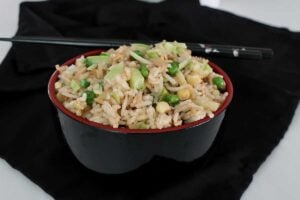
gluten-free Kung Pao Chicken with rice in a bowl with chopsticks

How to Store and Reheat Kung Pao Chicken

Refrigeration: Store leftover Kung Pao Chicken in an airtight container in the refrigerator for 3–4 days.

Reheating: Reheat in a skillet over medium-low heat until thoroughly heated. Add a splash of water or gluten-free chicken broth if the sauce has thickened during refrigeration.

Freezing: Freeze the cooked chicken and sauce in an airtight freezer-safe container for up to 2 months. Thaw overnight in the refrigerator before reheating. The bell peppers may soften slightly after freezing.

Make ahead: Prepare the sauce ingredients ahead of time and refrigerate until needed. You can also cut the chicken and vegetables in advance to make dinner preparation quicker.

Explore Our Best Gluten-Free Chicken Dinners for more delicious dinner inspiration.

Hi, I’m Kristina — I’ve been developing and testing gluten-free recipes in my own kitchen since 2012, with help from my very honest family.

Did you make this recipe? Leave a ⭐⭐⭐⭐⭐ rating and a quick review below, it helps other gluten-free cooks find recipes they can trust. For more, join me on Pinterest, Facebook, and Instagram.

Nutrition Info

  • Estimated per serving: Approximately 510 calories · 43 g protein · 22 g carbohydrates · 27 g fat · 2 g fiber · 13 g sugar. Note: Nutrition information is automatically calculated and is an estimate. Values may vary depending on the ingredients, brands, and serving size.
Add a Rating

Select a recipe rating

Leave a Comment

Comments

  1. Mike

    The recipe was a tad on the salty and a bit too much vinegar for us. I would advise backing off on the soy sauce by a tsp or maybe go with 1/2 tbsp and half the vinegar as well. I would also up the red pepper flake if you like it more spicy... I'd go with 3/4 tsp or just add in afterwards to taste.

  2. Kristina

    thank you for your input, sounds delicious.

  3. Cindee

    very tasty, I used low sodium tamari sauce and it turned out perfect!