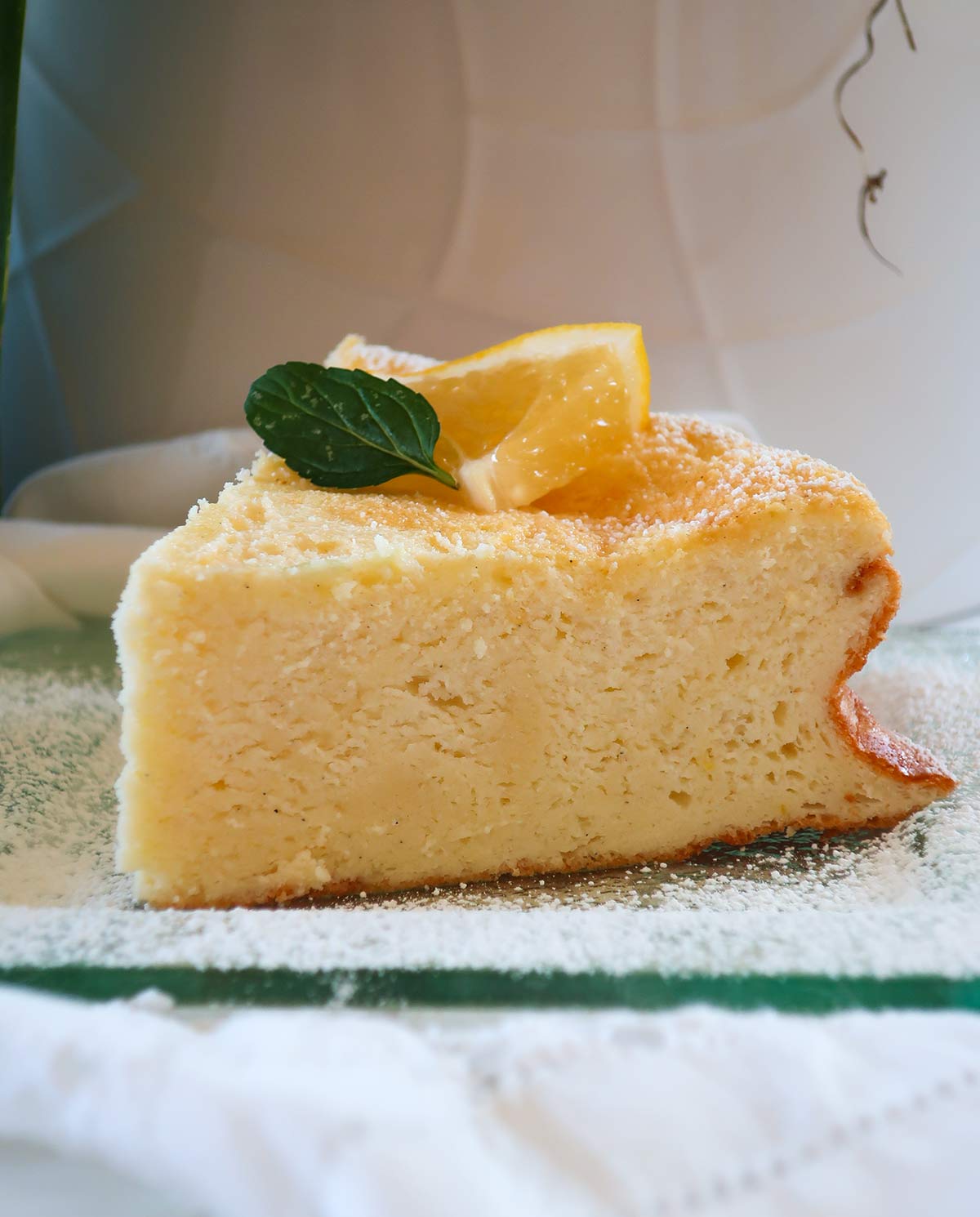
I love this easy 5-Ingredient Lemon Yogurt Cloud Cake because it’s gluten-free, corn-free, nut-free, and not overly sweet. After testing it many times with different starches, I found potato starch gives it the perfect creamy, airy texture, somewhere between cheesecake and a fluffy cloud. I like to add fresh lemon zest and just a touch of cardamom for another layer of flavor. And with only five ingredients, it’s one of my favorite quick, easy desserts that’s light, fresh, and beautiful to serve any time of day.
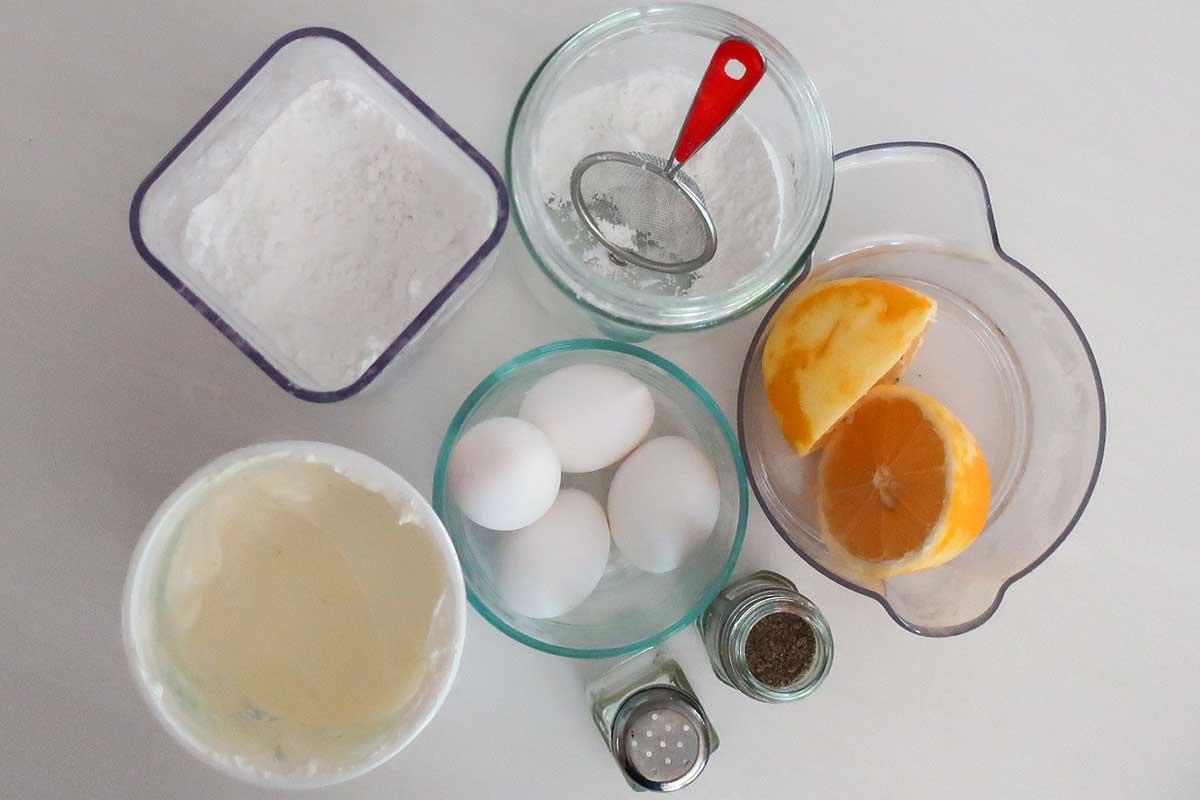
The 5 Gluten-Free and Corn-free Ingredients (Plus optional Cardamom and sea salt)
Everything you need to make this 5-Ingredient Lemon Cloud Cake, gluten-free, corn-free, and ready in minutes.
Directions
-
Prep – Preheat oven to 320°F (160°C). Line an 8-inch springform pan with parchment, grease the sides, and add a parchment collar. Place a roasting pan with 1 inch of boiling water on the bottom rack.
-
Yogurt Base – Rub lemon zest into powdered sugar until fragrant. Whisk with egg yolks until pale, then add Greek yogurt, lemon juice, and cardamom. Sift in potato starch and mix until smooth.
-
Egg Whites – Beat egg whites with a pinch of salt until soft peaks form.
-
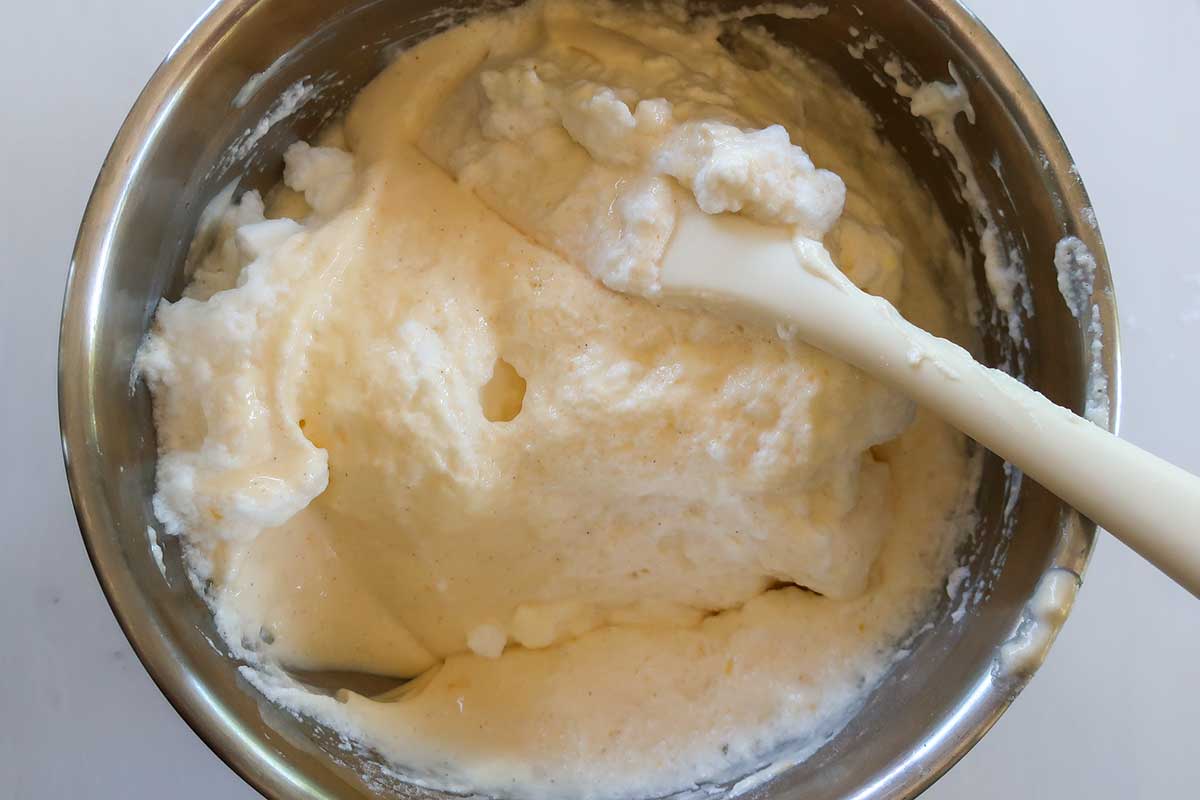
Fold – Fold 1/3 of the whites into the yogurt mixture, then gently fold in the rest until no streaks remain.
-
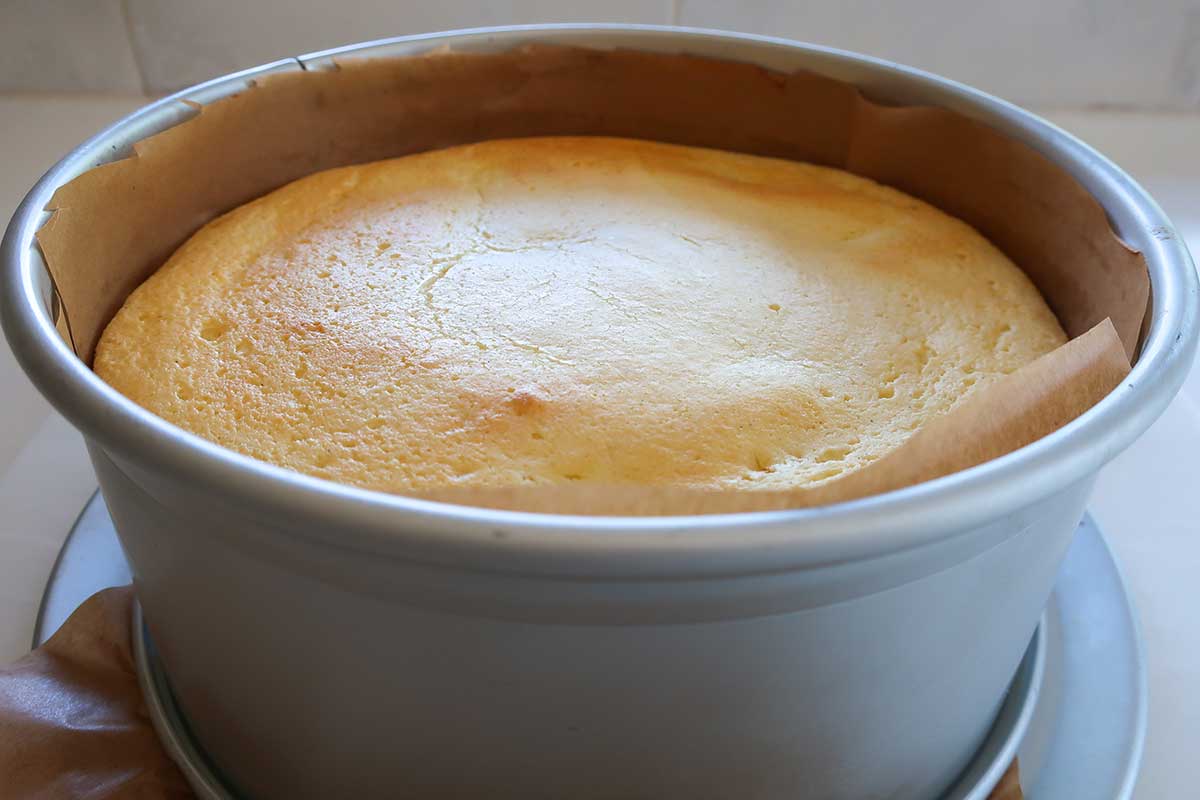
Bake – Pour batter into the pan and bake on the middle rack above the water for 50–60 minutes.
-
Cool & Serve – Let cake sit in the oven for 15 minutes, then cool completely. Refrigerate at least 4 hours or overnight, release the springform, peel the parchment paper and serve.
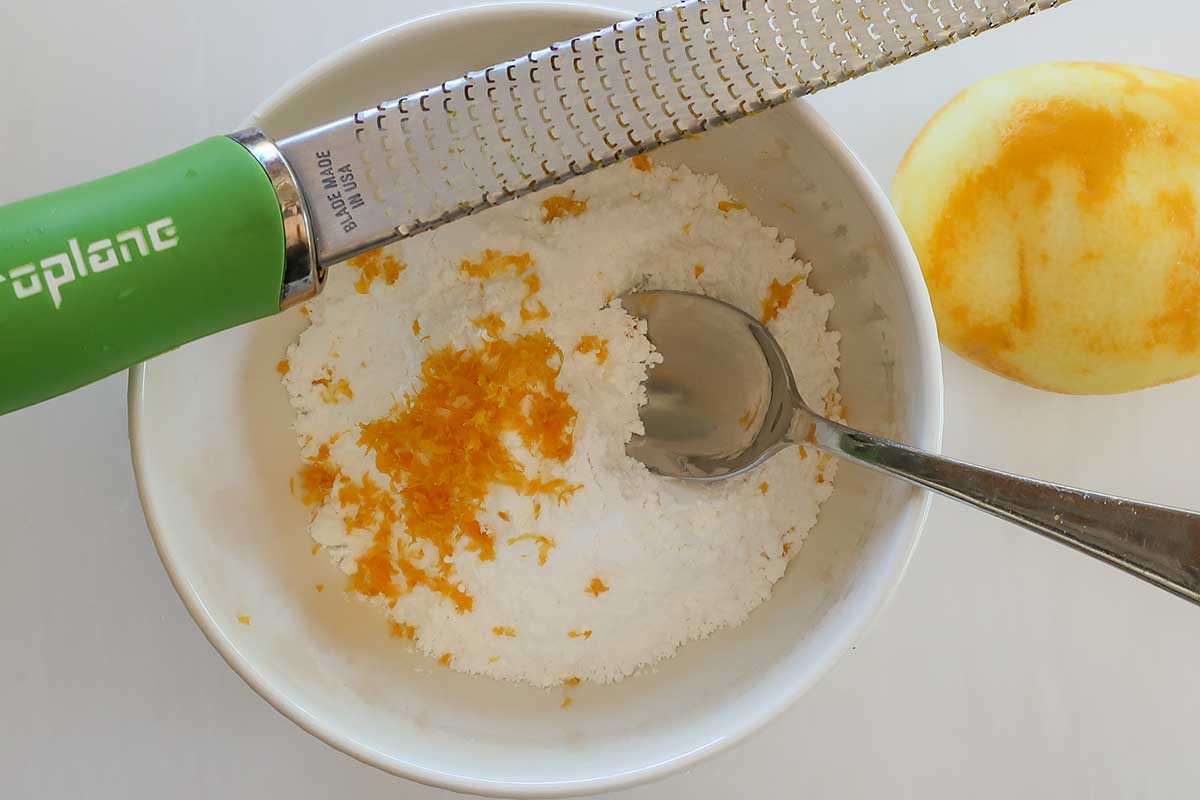
Why I First Rub the Lemon Zest Into the Sugar
One of my favorite little tricks in this recipe is rubbing the lemon zest into the powdered sugar before I mix the batter. Because powdered sugar is so fine, it absorbs all those fragrant lemon oils and turns into a soft, lemony sugar that flavors the cake more evenly than adding the zest at the end.

I just place the powdered sugar in a bowl, zest the lemon right over the top, and use the back of a spoon or my fingertips to rub everything together for about 30 seconds. The sugar will smell incredibly fragrant and may look slightly damp or clumpy, which is exactly what I want.
My Well Tested Troubleshooting Tips
If you don’t bake by weight, I recommend spooning the potato starch into the tablespoon instead of scooping or packing it down. Potato starch is heavier than people think, and too much can make the cake dense. This is one of those recipes where a kitchen scale really does help.
I fold about one-third of the egg whites into the yogurt mixture to lighten it, then gently fold in the rest until no white streaks remain.
Because the batter is quite thin before baking, it can sometimes leak from the bottom of a springform pan. I always line the base with parchment paper first, then lock the outer ring over the parchment to create a tighter seal. That little parchment trick helps keep the batter where it belongs.
If the top starts browning too quickly before the center is baked, I loosely tent it with foil near the end of baking. If the cake sinks a little in the middle after cooling, I don’t worry. That’s totally normal for a yogurt cake like this. I either leave it as is or fill the center with fresh berries and a dusting of powdered sugar.
Fruit Pockets
When I want little bursts of fruit throughout the cake, I gently fold in 1 cup of fresh blueberries or raspberries. Since the batter is thin, I like to toss the berries with a little extra potato starch first so they don’t sink straight to the bottom.
How I Know the Lemon Yogurt Cloud Cake Is Done
This cake has a very specific look when it’s ready. I look for three things: a nice rise, deep golden edges, and a center that is soft but not wobble. The edges should look set and stable, and that soft center will finish setting as the cake cools and chills.
The “One-Bowl” Method (Not Separating The Eggs)
The Result: A texture very similar to a Basque Cheesecake or a thick flan. It will be dense, creamy, and rich.
Pros: Much faster to make; less chance of the cake collapsing dramatically.
Cons: It won’t have much height and can feel a bit “heavy” if you eat a large slice.
The Most Important Step When Making Cloud Cake: Chill Time
I never slice this cake warm. As tempting as it is, the texture is not fully set until it has chilled for at least 4 hours, and overnight is even better. While it cools, it transforms from a soft, mousse-like cake into something denser, and much easier to slice.
I also leave it in the pan while it cools because the pan helps support the structure as the cake sets. It also keeps the edges from drying out too quickly and makes the final release much cleaner.
Why I Cool It Slowly
Because this is a delicate starch-based yogurt cake, I cool it gradually. Once baking time is up, I turn the oven off, crack the door open a couple of inches, and let the cake sit inside for about 15 minutes. That helps prevent the shock of cold air from making it collapse too quickly.
After that, I let it cool completely on the counter before moving it to the fridge to chill.
The Water Bath Trick Without a Water Bath
I don’t bake this cake in a traditional water bath, but I do place a pan of hot water on the lower oven rack while it bakes. That extra steam helps the cake bake more gently and keeps the texture soft and silky instead of dry or rubbery.
How I Safely Release the Cake
Once the cake is fully chilled, I run a thin knife around the inside edge of the pan before opening the latch. Then I release the springform ring slowly and gently peel away any parchment that sticks to the sides. I find that a cold cake releases much more cleanly than a warm one.
My Favorite Ways to Finish The Lemon Yogurt Cloud Cake

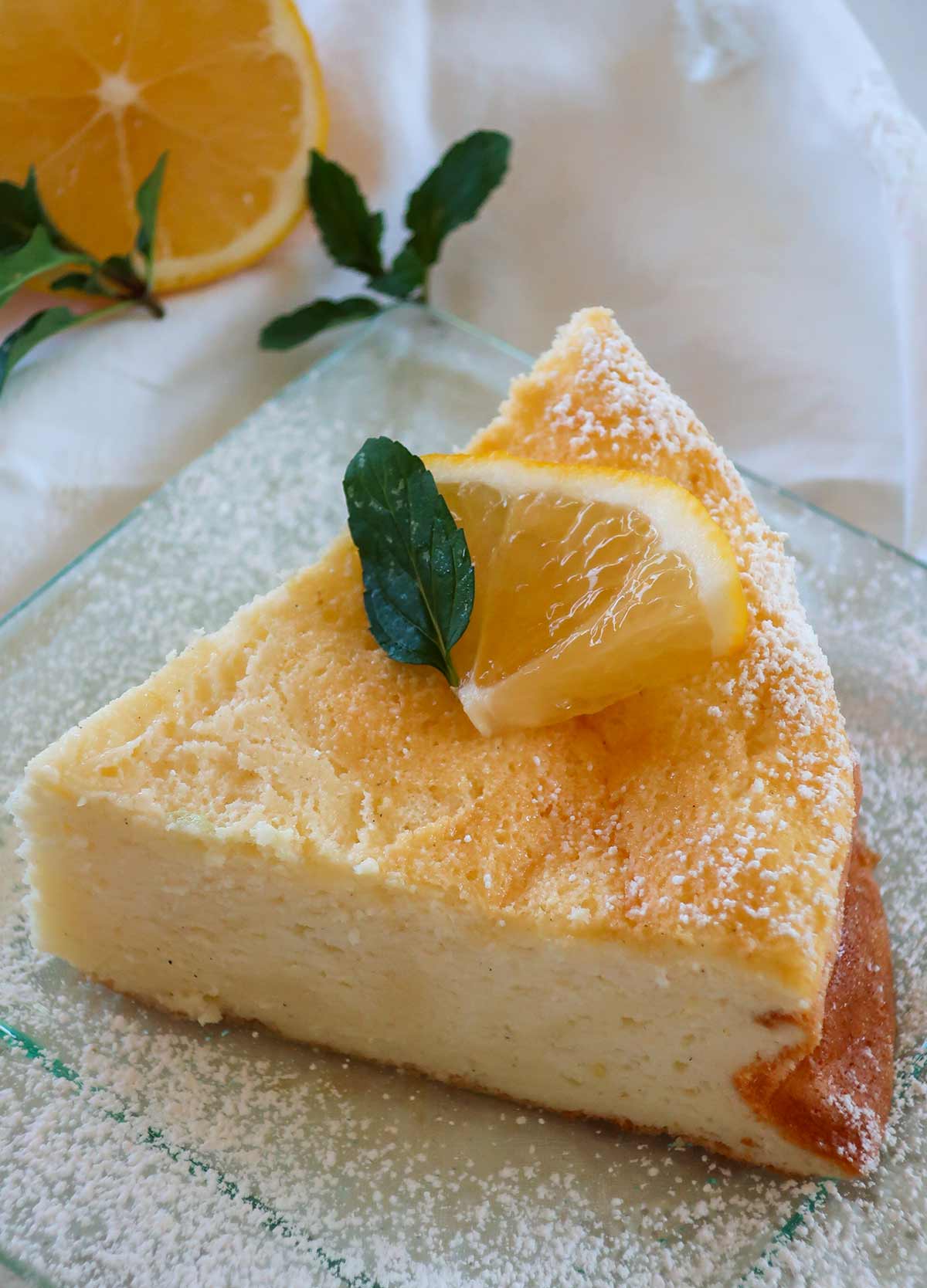
When I want to keep it simple, I dust the top with a little corn-free powdered sugar right before serving and add fresh raspberries or thin lemon slices.
If I want something a little softer and prettier, I top it with a cloud of whipped cream sweetened with powdered sugar and a tiny pinch of cardamom. Sometimes I even fold a little Greek yogurt into the whipped cream for a tangy topping that matches the cake perfectly.
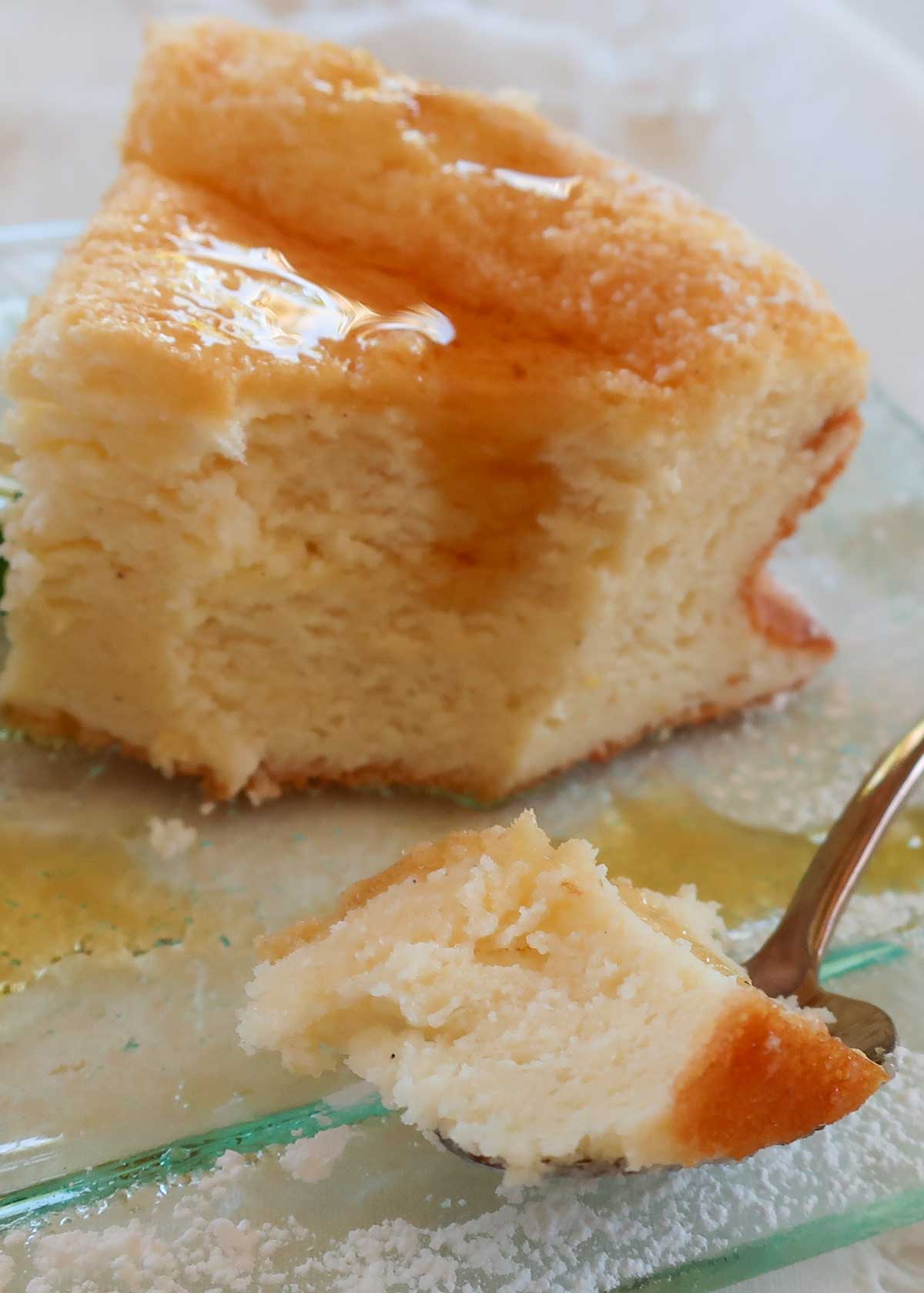
And when I want a glossy finish, I brush the top with a quick honey-lemon glaze. It gives the cake a soft shine and adds a little extra flavor without overpowering the lemon and cardamom. To make it whisk together 2 tablespoons warm honey and 1 tablespoon fresh lemon juice until smooth, then brush it over the cake just before serving.
When I serve this cake for breakfast or brunch I drizzle it with pure maple syrup.
To keep it sugar-free I often will use Monk Fruit Sweetener. You will need less of it since it is sweeter, follow the package instructions.
Storing Cloud Cake to Keep it Fresh
I store this cake covered in the refrigerator, where it stays fresh for about 3 to 4 days. I actually think it tastes even better the next day once the flavor settles and the texture fully sets.
More Gluten-Free Desserts You’ll Love
If you love this Lemon Cloud Cake, you might also enjoy some of my other favorite gluten-free treats. I’m a big fan of the Gluten-Free Vanilla Custard Magic Cake, which starts with just one batter and magically bakes into three layers.
For something fruity and simple, the Easy Apple Sour Cream Custard Cake is grain- and nut-free but full of flavor. And I can’t resist the Gluten-Free Apple Pecan Yogurt Cake with Maple Drizzle, which is lightly sweet, perfectly spiced, and topped with a drizzle of pure maple syrup.

FAQ for Beginners
Can I use cornstarch instead of potato starch?
You can, but I do not recommend treating it as a straight tablespoon-for-tablespoon substitution. Potato starch and cornstarch have different densities, so using the same volume will change the texture of the cake. For the closest result, I would substitute by weight, keeping in mind that cornstarch will still bake up a little differently and may give the cake a slightly firmer texture.
Why did my cake sink in the middle?
A little sinking is completely normal with a yogurt cake like this, as it cools. The center is meant to stay slightly soft when it comes out of the oven, and it firms up more as it chills.
Can I make my own corn-free powdered sugar?
Yes. I make my own by blending granulated sugar in a high-speed blender until it turns into a fine powder. Just let the sugar dust settle before opening the lid. 2/3 cup of regular granulated sugar makes about 1 cup powdered sugar.
Tried this recipe?
If you enjoyed this lemon yogurt cloud cake, please leave a star rating and review! Your feedback helps others find these recipes. Be sure to FOLLOW US on FACEBOOK or, check us out on PINTEREST. And don’t forget to sign up for our newsletter. We always have something delicious coming next!
Many thanks!
Kristina x






Comments
No comments yet.